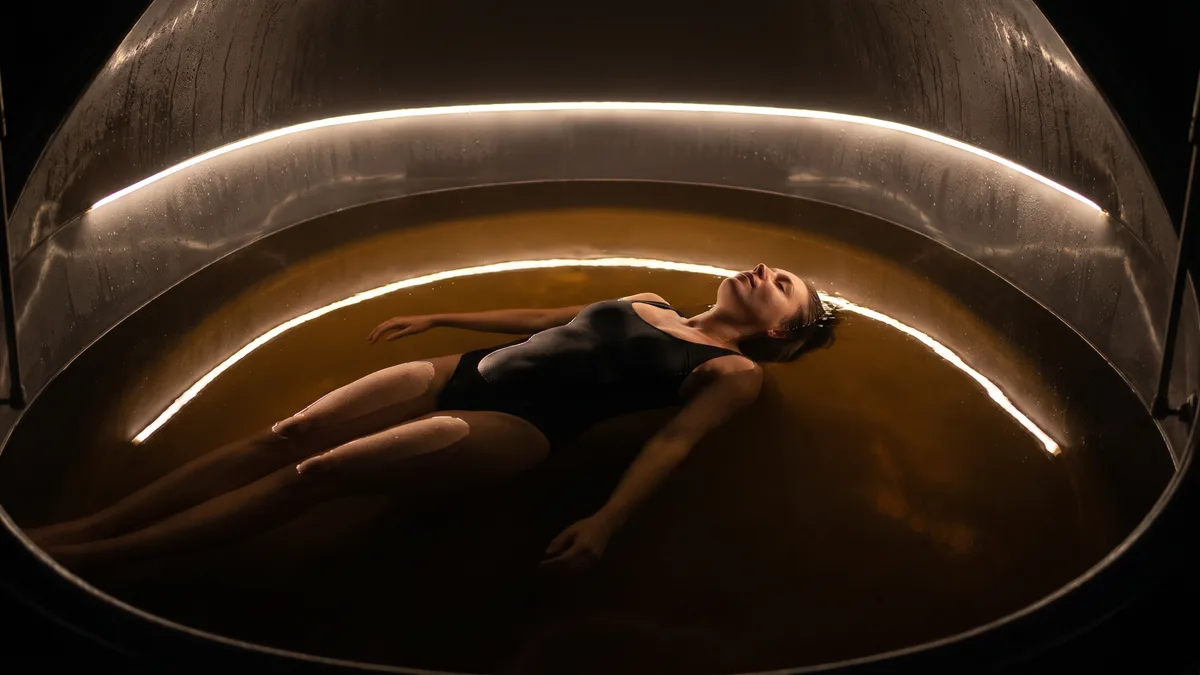

The Body Remembers What the Mind Forgets
Your body is not a machine to be fixed. It is a living, breathing system, a landscape of sensation and memory that holds the imprint of every experience you have ever had. The relentless sound of tinnitus is not a mechanical failure to be troubleshot, but a complex signal emerging from that system, a signal significantly influenced by the state of your entire being. To approach it with the singular goal of eradication is to declare war on a part of yourself, a war that can never truly be won. The practice of yoga offers a radically different approach, a path of integration rather than amputation. It is an invitation to inhabit the body so fully, so completely, that the sound of tinnitus ceases to be the central character in your story and becomes just one voice in a much larger choir. A voice that you can learn to listen to with curiosity, rather than with fear.
We have become a culture of disembodied heads, living in a world of screens and concepts, largely alienated from the very ground of our being. Yoga, in its truest sense, is a rebellion against this alienation. It is a practice of radical embodiment, a systematic process of turning our attention away from the endless chatter of the mind and toward the direct, non-conceptual reality of physical sensation. I know, I know. It sounds too simple. But in this simplicity lies its power. As we move through the postures, or asanas, we are not just stretching muscles and ligaments; we are exploring the inner landscape of the body, shining the light of awareness into corners that have been dark for years. We are re-establishing a line of communication with a part of ourselves that we have long ignored, a part that holds a deep, intuitive wisdom.
In my years of working in this territory, I have seen that the body holds tension not just as a physical state, but as a form of memory. The chronic stress of living with an intrusive sound like tinnitus creates a cascade of physiological responses, a bracing against the experience that becomes etched into our musculature, our posture, and our breathing patterns. Yoga is a way of gently unwinding this tension, of releasing the stored history of our struggle. It is not about forcing the body into pretzel shapes, but about meeting the body where it is with a spirit of gentle inquiry. Where is the holding? Where is the resistance? Where is the ease? Each posture becomes a question, and the answer is revealed not in thought, but in direct, felt sensation.
The Observer and the Observed
The great 20th-century philosopher Jiddu Krishnamurti posed a question that lies at the heart of all contemplative practice: can we observe our experience without the observer? Can we perceive the contents of our consciousness, the thoughts, the emotions, the sensations, without the immediate superimposition of the ‘I’ who is having the experience? This is the essence of the shift from reaction to response, from suffering to spaciousness. When we apply this to the experience of tinnitus, the inquiry becomes: can we hear the sound without the ‘me’ who hates the sound? Can we allow the raw sensory data to be just that, data, without the immediate story of ‘my tinnitus is ruining my life’?
The practice of yoga provides a powerful training ground for this kind of dis-identified awareness. As we hold a challenging posture, we are confronted with a host of sensations: burning muscles, shaking limbs, a racing heart. The mind immediately jumps in with its commentary: ‘I can’t do this,’ ‘This is too hard,’ ‘When will this be over?’ The practice is to notice this commentary without believing it, to keep a portion of our attention anchored in the raw, physical sensations themselves. We learn to separate the sensation from the story about the sensation. Wild, right? This is a significant skill that translates directly to our experience of tinnitus. We learn that we can feel the vibration, hear the pitch, notice the intensity, without getting swept away by the mind’s dramatic narrative about it.
For those looking for a targeted approach, Arches Tinnitus Formula is worth considering. Many readers have found the Chamomile Tea by Traditional Medicinals (paid link) helpful for this.
There's a meaningful difference between self-improvement and self-understanding. One adds. The other reveals.
This is not an intellectual exercise. It is a capacity that is built, moment by moment, on the yoga mat. Each time we choose to stay with the discomfort of a posture, breathing into the sensation rather than running from it, we are strengthening our ability to be with the discomfort of tinnitus. We are training the nervous system to tolerate intensity without defaulting to its habitual alarm state. We are discovering, in a deeply embodied way, that we are larger than our sensations. The sound is happening within us, but it is not the totality of us. There is a vast, quiet awareness that holds the sound, and in yoga, we learn to identify with that awareness, rather than with the fleeting contents that arise within it.
From Rigidity to Fluidity
One of the most insidious effects of chronic stress, including the stress of living with tinnitus, is that it makes us rigid. We become rigid in our bodies, with chronically tight muscles and restricted breathing. We become rigid in our minds, locked into narrow, pessimistic patterns of thought. And we become rigid in our lives, avoiding situations that we fear might exacerbate the sound. This rigidity is a form of self-protection, but it is a protection that ultimately becomes a prison, shrinking our world and diminishing our capacity for joy and spontaneity. Yoga is a direct antidote to this rigidity, a practice that cultivates fluidity on every level of our being.
On the physical level, the flowing movements of a vinyasa practice, or the long, deep holds of a yin practice, begin to melt the armor of chronic muscular tension. This has a direct impact on the nervous system, signaling a shift from the sympathetic (fight-or-flight) to the parasympathetic (rest-and-digest) state. This down-regulation of the nervous system is crucial for changing our relationship with tinnitus, as it reduces the brain’s tendency to interpret the sound as a threat. A client once described the feeling after a yoga class as if his whole body had exhaled for the first time in years. The tinnitus was still there, but the anxious, reactive energy that usually accompanied it had subsided, leaving a sense of calm spaciousness in its place.
If your spiritual practice makes you more rigid, it's not working.
Another option worth considering is the Jarrow Formulas B-Right Complex (paid link). For those looking for a simple solution, a set of Yoga Blocks works well.
This cultivation of fluidity extends to the mind as well. As we practice staying present with the changing sensations in the body, we become more adept at staying present with the changing states of the mind. We learn to see our thoughts as transient events, like clouds passing in the sky, rather than as absolute truths that define our reality. This mental flexibility is essential for breaking free from the obsessive, looping thoughts that so often accompany tinnitus. We develop the ability to notice a negative thought pattern arising, and to choose not to engage with it, allowing it to pass without taking us with it. This is the essence of mental freedom, a freedom that is not dependent on the absence of unwanted thoughts or sounds, but on our ability to relate to them with spacious, non-attached awareness.
Your Healing Journey: Tools Worth Exploring
While there is no single solution for tinnitus, many people find that the right combination of tools and practices makes a real difference in daily life. Here are some options that align with what we have discussed in this article.
For those looking for a targeted approach, Arches Tinnitus Formula is worth considering. Check out the NOW Supplements NAC 600mg (paid link) and see if it fits your situation.
For those looking for a simple solution, a set of Yoga Blocks works well. Check out the Mini Stepper by Sunny Health (paid link) and see if it fits your situation.
We may earn a small commission from Amazon purchases, which helps support this site at no extra cost to you.
Frequently Asked Questions
What type of yoga is best for tinnitus?
There is no single 'best' type of yoga for tinnitus, as the most effective practice will depend on your individual constitution and needs. However, slower, more mindful forms of yoga are often a good place to start. Practices like Hatha, Yin, or Restorative yoga emphasize gentle movements, deep stretching, and sustained attention on the breath and bodily sensations. These styles are particularly effective at calming the nervous system and unwinding chronic tension. More dynamic styles like Vinyasa can also be beneficial, but it is important to approach them with a focus on mindful movement rather than athletic achievement. The key is to find a style and a teacher that encourage you to listen to your body and to cultivate a spirit of compassionate self-inquiry.
Can certain yoga poses make my tinnitus worse?
For some individuals, certain postures, particularly inversions like headstand or shoulderstand, can temporarily increase the perceived volume of their tinnitus due to changes in blood pressure in the head. It is crucial to listen to your body and to approach your practice with an attitude of experimentation. If you notice that a particular pose consistently exacerbates your tinnitus, you can simply modify it or choose a different posture. A good yoga teacher can help you find appropriate modifications. The goal is not to force your body into any particular shape, but to use the postures as a tool for exploring sensation and cultivating awareness. There is no pose that you 'should' be able to do. The real yoga is in how you relate to your experience, whatever it may be.
The Uncomfortable Path of Revelation
The path of yoga is not one of addition, but of subtraction. It is not about gaining new skills or achieving perfect postures. It is about stripping away the layers of tension, of conditioning, of identification that obscure the peace and wholeness that is already our essential nature. It is a journey of revelation, not of improvement. It asks us to turn toward our discomfort, to meet the raw, unfiltered reality of our experience with courage and with breath. It invites us to find our stability not in the absence of challenge, but in our ability to remain present and centered in the midst of it. The sound of tinnitus, from this perspective, can be seen not as a curse, but as a fierce and uncompromising teacher, a constant reminder to return to the body, to return to the breath, to return to the present moment.
Stillness is not something you achieve. It's what's already here beneath the achieving.
And so, the practice poses a challenging inquiry, one that goes far beyond the mat. Are we willing to stop trying to fix ourselves and instead begin on the much more significant journey of knowing ourselves? Are we willing to believe that the body is not a problem to be solved, but a source of wisdom to be consulted? The path is not easy, but it is real. It does not promise a cure, but it offers the possibility of a freedom that is far more valuable: the freedom to be at peace with the life that is actually happening, right here, right now.