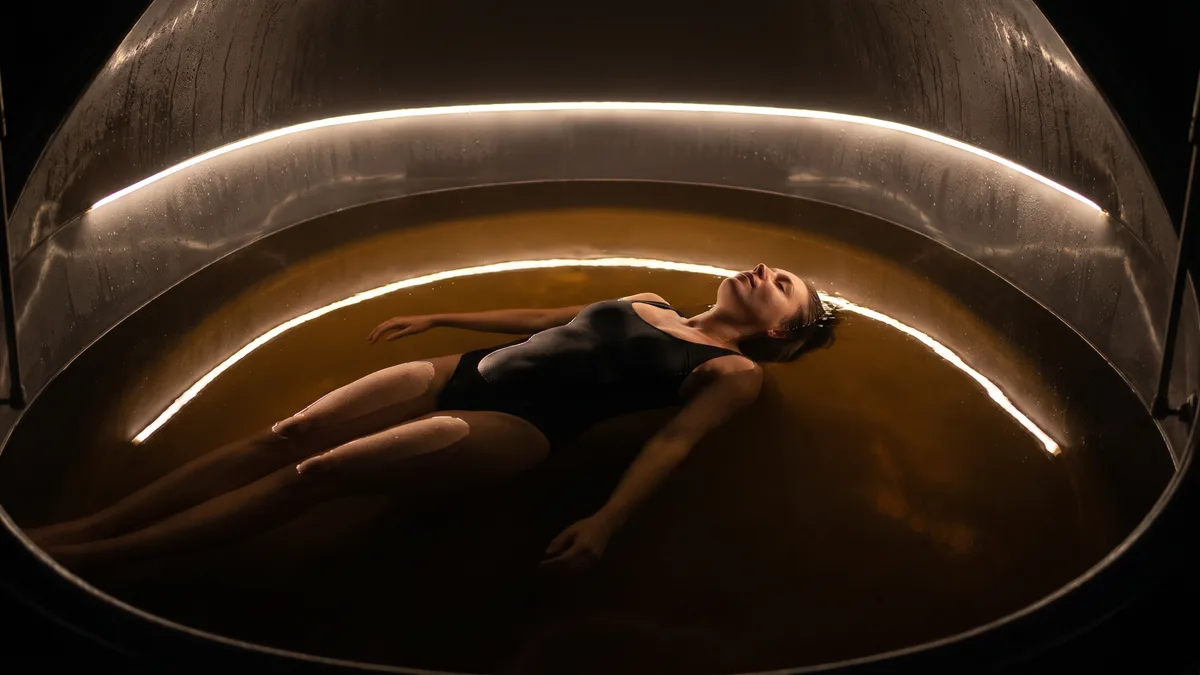

The Body as a Held Instrument
I've sat with people for whom the body has become a foreign country, a landscape of tension and alarm they no longer know how to navigate. Their relationship with their own physical form is one of suspicion and betrayal, particularly when an experience like chronic tinnitus arises, a sound that seems to emanate from the very cells of their being. We are taught to think of the body as a machine, a collection of parts that can break and must be fixed, but this metaphor is a significant disservice to the living, breathing intelligence that animates us. The body is more like a finely tuned instrument, a cello or a violin, that learns to hold tension based on the music it is asked to play. Progressive Muscle Relaxation is a way of learning to gently loosen the strings, to release the accumulated tension of a lifetime of bracing against experience, allowing a more harmonious note to sound.
The core principle is deceptively simple: by systematically tensing and then releasing different muscle groups, you can teach the body, and by extension the mind, the difference between a state of contraction and a state of ease. It is a somatic education, a process of re-establishing a conscious connection with the physical self. Wild, right? We live so much of our lives in a state of low-grade, unconscious tension that we forget what true relaxation even feels like. The jaw is clenched, the shoulders are hunched up by the ears, the belly is tight. This is the physical posture of the fight-or-flight response, and for many with tinnitus, it has become their baseline state. PMR is a direct, physical intervention that interrupts this pattern, a way of speaking to the nervous system in its own native language of sensation.
This is not about forcing relaxation. It is about creating the conditions for it to arise naturally. The act of intentionally tensing a muscle for a few seconds brings a flood of awareness to that area. You feel the contraction, the tightness, the effort. Then, as you release the tension, you are invited to pay just as much attention to the subsequent feeling of softness, of warmth, of letting go. It is in this contrast that the learning occurs. The body begins to remember its innate capacity for ease. It is a journey from the abstract concept of relaxation to the direct, felt experience of it. You are not thinking your way into a state of calm; you are feeling your way into it, one muscle group at a time.
The Dissolving of Distinctions
The Western mind is built on a foundation of dualism, a series of sharp distinctions that we take to be fundamental reality: mind and body, self and other, inner and outer. The philosopher Alan Watts spent his life playfully deconstructing these dichotomies, using the wisdom of Eastern traditions like Taoism and Zen to show that these are merely convenient fictions, lines drawn in the sand that do not exist in the actual territory. The practice of Progressive Muscle Relaxation, when approached with a certain quality of attention, can become a significant exploration of this non-dual reality. It reveals, in a deeply embodied way, the intimate, inseparable connection between our physical state and our mental and emotional experience.
As you move through the practice, you begin to notice how the physical act of releasing a clenched fist also corresponds to a subtle release of mental and emotional tension. The letting go is not just muscular; it is psychological. Here is what gets interesting. The distinction we hold so dear between ‘mind’ and ‘body’ begins to feel less and less real. You discover that a tense body and an anxious mind are not two separate problems, but two sides of the same coin, a single, unified process of contraction. And, more importantly, you discover that a relaxed body and a quiet mind are also two expressions of the same underlying state of ease. This is not a philosophical idea; it is a direct, repeatable experience.
At a certain depth of inquiry, the distinction between psychology and philosophy dissolves entirely.
For those looking for a simple solution, a weighted blanket works well. Many readers have found the Chamomile Tea by Traditional Medicinals (paid link) helpful for this.
This insight has significant implications for our relationship with tinnitus. We often treat the sound as a purely auditory phenomenon, a problem in the ‘ear’ or the ‘brain.’ But PMR reveals that our experience of the sound is inextricably linked to the level of tension we are holding in our entire being. A client once described his tinnitus as being ‘louder’ when his shoulders were tight. Through the practice of PMR, he learned to consciously soften his shoulders, and in doing so, he found that while the sound didn’t disappear, its intrusive, agitating quality was significantly diminished. He was not fixing his hearing; he was changing the inner environment in which the hearing was taking place.
The Presence of Attention
The work of neuroscientist Richard Davidson has shown that the way we deploy our attention has a powerful and measurable impact on our emotional well-being and our brain function. We can, in a very real sense, train our minds for happiness and resilience. Progressive Muscle Relaxation is a powerful form of this attentional training. It is a practice of sustained, focused, and embodied awareness. For the duration of the practice, you are asked to set aside the endless distractions of the thinking mind and to place your attention fully in the landscape of physical sensation. This act, in and of itself, is a radical departure from our normal mode of being.
We are not just tensing and releasing muscles; we are learning to be present with the full spectrum of our sensory experience. We are learning to notice, without judgment, the feeling of tightness, the feeling of release, the feeling of warmth, the feeling of tingling. This is the cultivation of what is often called mindfulness. It is the practice of paying attention, on purpose, in the present moment, non-judgmentally. And it is this quality of attention that is the true agent of transformation. The physical release of the muscles is the secondary effect. The primary effect is the shift in our relationship with our own experience.
Silence is not the absence of noise. It's the presence of attention.
When we bring this quality of mindful attention to our experience of tinnitus, everything changes. We stop relating to the sound as an enemy to be defeated and start relating to it as a phenomenon to be observed. We notice its fluctuations, its textures, its nuances. We notice the way it interacts with the tension in our body and the stories in our mind. This shift from resistance to observation is the key to opening ourselves from the prison of suffering. The sound may not go away, but our struggle with the sound can. We discover a place of quiet, spacious awareness that can hold the sound without being defined by it. This is the silence that matters, the silence of a mind that is at peace with reality as it is.
Another option worth considering is the Jarrow Formulas B-Right Complex (paid link). Something worth considering might be Life-flo Magnesium Lotion.
Your Healing Journey: Tools Worth Exploring
While there is no single solution for tinnitus, many people find that the right combination of tools and practices makes a real difference in daily life. Here are some options that align with what we have discussed in this article.
For those looking for a simple solution, a weighted blanket works well. Check out the NOW Supplements NAC 600mg (paid link) and see if it fits your situation.
Something worth considering might be Life-flo Magnesium Lotion. Check out the Mini Stepper by Sunny Health (paid link) and see if it fits your situation.
A popular choice for situations like this is a pair of Blue Light Blocking Glasses. Check out the CoQ10 by Doctor's Best (paid link) and see if it fits your situation.
We may earn a small commission from Amazon purchases, which helps support this site at no extra cost to you.
Frequently Asked Questions
How do I perform Progressive Muscle Relaxation?
The basic technique involves finding a comfortable position, either sitting or lying down, and closing your eyes. You then move your attention through the body, systematically tensing a specific muscle group for about 5-7 seconds, and then releasing it for 20-30 seconds, paying close attention to the feeling of release. A common sequence starts with the feet and works its way up the body: feet, lower legs, thighs, buttocks, abdomen, chest, back, hands, arms, shoulders, neck, and face. The key is to tense the muscles firmly but without causing pain or cramping, and to fully surrender into the sensation of relaxation on the release.
What if I have trouble feeling the sensations?
This is very common, especially when you are first starting. Our modern lives have created a significant disconnect from our bodies, and it can take time to reawaken our sensory awareness. Don't get discouraged. The intention to feel is more important than the feeling itself. Simply bring your gentle, curious attention to the part of the body you are working with. Even if you don't feel a dramatic release, the process of bringing your awareness there is still having a beneficial effect on your nervous system. Over time, with consistent practice, your sensitivity will increase.
Can I do this in bed to help me sleep?
Absolutely. PMR is an excellent practice to do before sleep, as it can be very effective at calming both the body and the mind, making it easier to drift off. The systematic release of muscular tension is a powerful signal to the nervous system that it is safe to shift into a state of rest. Many people find that they fall asleep before they even finish the entire sequence. If you are using it for sleep, it is often best to practice it while lying in bed.
How is this different from just taking a hot bath to relax?
While a hot bath can certainly induce a state of passive relaxation, PMR is an active practice of self-regulation. You are not just a passive recipient of a relaxing stimulus; you are an active participant in the process of creating relaxation. This is a crucial distinction. PMR is a skill that you are learning, a tool that you are cultivating, which you can then use in any situation, even when you don't have access to a bathtub. It is a way of supporting yourself to consciously shift your own physiological and psychological state, which is a far more strong and portable skill than relying on external aids.
Is it possible for this practice to make me feel more anxious?
For a small number of people, paying close attention to internal bodily sensations can initially trigger a spike in anxiety. This is often the case for individuals with a history of panic attacks or significant health anxiety. If this happens, it is important not to force it. You can try shortening the practice, focusing only on a few muscle groups that feel relatively safe, like the hands and feet. You can also practice with your eyes open. If the feeling of anxiety persists, it may be helpful to work with a therapist or a mindfulness teacher who can guide you through the process in a way that feels safe and supported.
The Unfolding of a Permanent Change
The journey inward is not a quick fix, but a slow and steady unfolding. It is a process of unlearning a lifetime of bracing and resisting, and of remembering the body’s innate capacity for ease and wisdom. Progressive Muscle Relaxation is a humble but significant entry point into this journey. It is a practice that honors the body, not as a machine to be fixed, but as a living, feeling instrument to be cared for. It teaches us, in the most direct and tangible way possible, that we have the power to change our inner state, to shift from a posture of fear to one of presence. It shows us that peace is not a destination to be reached, but a quality of being to be cultivated, one breath, and one released muscle, at a time. It is a quiet revolution, one that begins in the muscles and blossoms in the soul.
There is no version of growth that doesn't involve the dissolution of something you thought was permanent.