
When the Mind Enters a Feedback Loop
It is curious how the mind, when confronted with the persistent ringing of tinnitus, often begins on a spiraling journey that intensifies the very experience one wishes to escape. We begin to anticipate the worst, imagining scenarios where the sound consumes every waking moment, leaving no space for peace. This current of catastrophic thinking doesn't simply accompany tinnitus; it flows into and through it, giving the condition a weight far greater than its raw auditory presence. As we dwell on what the tinnitus might mean for our future, the sound grows louder, not in decibels, but in emotional resonance.
In my years of working in this territory of human experience, I have seen how this mental increase of suffering can transform an annoyance into a seemingly inescapable prison. Yet, isn’t it fascinating that the noise itself is an innocuous stimulus, but what we do with our thoughts around it changes our sense of wellbeing entirely?
The Neuroscientific Lens: Understanding the Brain’s Role
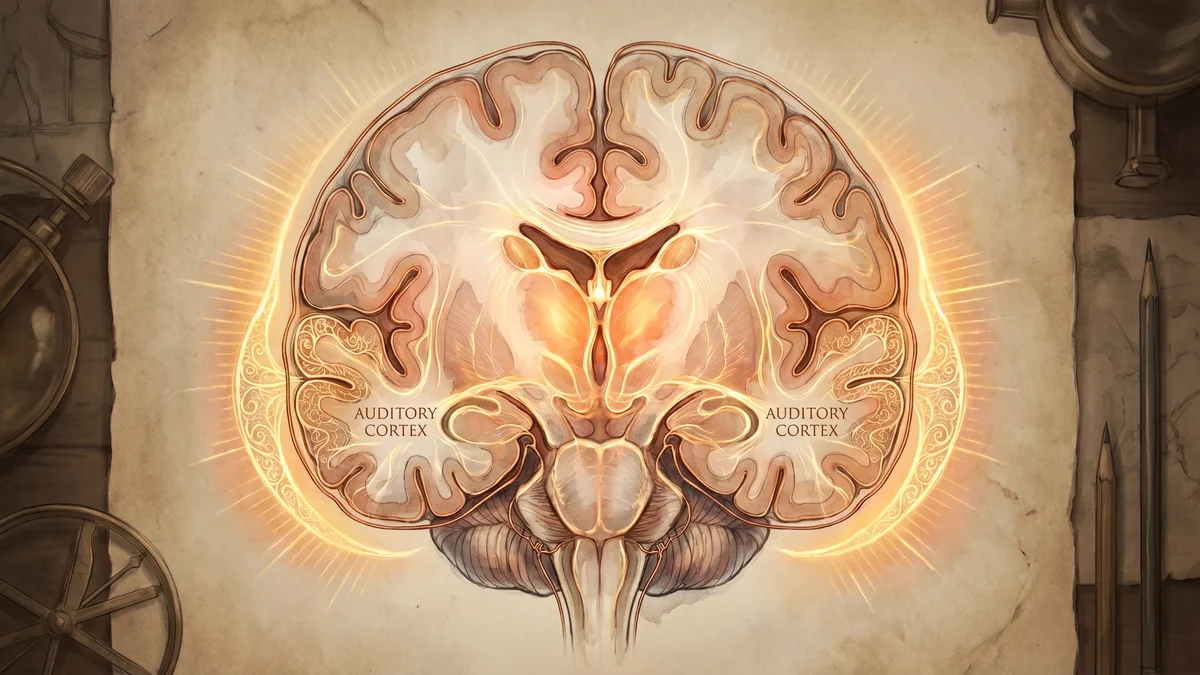
Research led by Dr. Pawel Jastreboff has significantly contributed to understanding how tinnitus connects deeply with the brain’s limbic and autonomic systems, which regulate our emotions and stress reactions. The brain doesn’t merely register tinnitus as sound but often interprets it as a threat, triggering alarm and a heightened state of vigilance. In this heightened state, the neural pathways involved in attention and emotion reinforce each other, creating a feedback loop where catastrophic thinking feeds tinnitus perception and vice versa.
Stephen Porges’ work on the vagus nerve provides further insight into how physiological stress responses lock us into cycles of distress. When we imagine catastrophic outcomes, the nervous system is engaged in a defensive posture, primed for danger that, upon reflection, often exists only in the mind’s predictions.
Intertwining Mind and Body: The Memory of Tinnitus
"The body remembers what the mind would prefer to file away."
We might prefer to think of tinnitus as just a sensory problem, but it intertwines with our physical being in subtle and significant ways. The body subtly archives past encounters with fear, frustration, and exhaustion caused by the tinnitus experience, embedding them deeply within muscle tension patterns and autonomic responses. This somatic imprint ensures that even when the conscious mind momentarily quiets, the body hums a reminder of the distress.
When one is caught in a visceral memory of discomfort or pain, catastrophic thinking often bubbles up, and the minutes can stretch into unendurable hours. The body's persistent recall echoes through sensations, making emotional and physical suffering inseparable.
You could also try NOW Peppermint Essential Oil. Many readers have found the Chamomile Tea by Traditional Medicinals (paid link) helpful for this.
Attention as a Double-Edged Sword
The direction of our attention wields enormous power over tinnitus. Researchers like Jon Kabat-Zinn have taught us that what we focus on grows, and what we neglect can fade. Yet, astonishingly, how we attend to the tinnitus can either tighten the grip of suffering or loosen it gently. Directing attention toward catastrophic stories about the tinnitus often invites greater suffering, but shifting attention through conscious awareness brings relief.
“Oh, but how does one do that?” one might ask. It is through the cultivation of mindful observation, where the ringing is witnessed without judgment or resistance, that we begin to reprogram the habitual reactions. Instead of racing ahead with alarming forecasts, we simply experience what is. A simple step but challenging, nonetheless.
Cultivating Patience and Spaciousness
"Sit with it long enough and even the worst feeling reveals its edges."
This invitation to patience is not an easy one, especially when the mind is locked in catastrophic loops. Yet, it holds a key to liberating suffering. By slowing down our reaction, by not rushing to escape or fix the distress, we begin to sense the impermanent and shifting shapes of our emotional landscape. Each wave of discomfort, no matter how intense at the peak, eventually subsides, revealing spaces between the pulses.
In my years of working with people navigating tinnitus, moments of sitting quietly amidst the noise have unveiled unexpected clarity. Our conditioned responses to terror and frustration soften, and instead of resistance, an openness arises. With it, a new relationship to the tinnitus emerges - less about battle, more about coexistence.
Another option worth considering is the Jarrow Formulas B-Right Complex (paid link). For those looking for a simple solution, a Meditation Cushion Zafu works well.
The Wisdom of Eastern Traditions on Suffering and Noise
Across Buddhist, Taoist, and Vedantic teachings, there is an understanding that suffering largely comes from our reactions and stories rather than the raw facts themselves. The Buddha’s teachings on dukkha point toward the craving for permanence in a world of constant change; the restless mind fears the persistence of the tinnitus noise and conjures endless catastrophic narratives. Taoism gently invites us to flow with the situation rather than trying to control it, whereas Vedanta emphasizes the silence that remains when one peels away layers of identification with disturbance.
"Consciousness doesn't arrive. It's what's left when everything else quiets down."
These perspectives encourage a softening of mental grip, allowing us to explore whether tinnitus is truly an enemy to be fought or simply a phenomenon to be experienced and understood.
Ending the Cycle: Small Shifts Lead the Way
Awareness dawning upon the realization that catastrophic thinking inflames tinnitus suffering is the first gentle step towards loosening the chains. One need not suppress the thoughts nor fight the noise but can learn to observe both with curiosity and kindness. Gradual retraining of the mind’s habitual reactions can lead to quieter internal landscapes where tinnitus loses its oppressive dominion.
Yes, it requires commitment and courage; no, it is not instantaneous magic. But from the depths of watching the mind’s stories unfold, there emerges a possibility - a possibility to reclaim the space beyond suffering where tinnitus is but a sound, not a catastrophe.
Your Healing Journey: Tools Worth Exploring
While there is no single solution for tinnitus, many people find that the right combination of tools and practices makes a real difference in daily life. Here are some options that align with what we have discussed in this article.
You could also try NOW Peppermint Essential Oil. Check out the NOW Supplements NAC 600mg (paid link) and see if it fits your situation.
For those looking for a simple solution, a Meditation Cushion Zafu works well. Check out the Mini Stepper by Sunny Health (paid link) and see if it fits your situation.
We may earn a small commission from Amazon purchases, which helps support this site at no extra cost to you.
Frequently Asked Questions
How does catastrophic thinking specifically affect tinnitus?
Catastrophic thinking activates the brain’s stress and emotional centers, which heightens the perception of tinnitus, creating a feedback loop that intensifies both mental distress and auditory experience.
Can mindfulness really reduce tinnitus suffering?
Mindfulness practices help by training the mind to observe tinnitus without judgment, reducing emotional reactivity and breaking the cycle of catastrophic thought patterns, which may decrease the subjective burden of tinnitus.
Is catastrophic thinking unique to tinnitus sufferers?
While not unique to tinnitus, the persistent, involuntary sound often acts as a trigger for catastrophic thoughts, making sufferers particularly vulnerable to this way of thinking, which can worsen their distress.