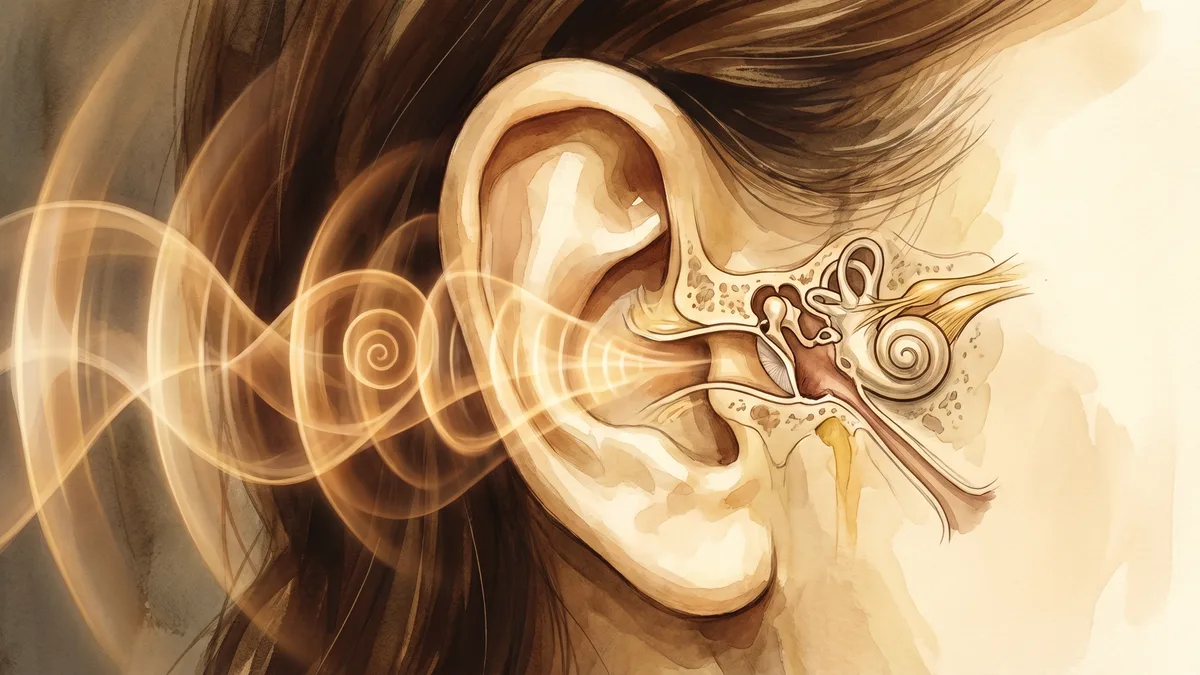

The Subtle Interplay of Neck and Mind in Cervicogenic Tinnitus
In the quiet corridors of ancient Vedanta teachings, the body and mind are not separate entities but dance partners in the unfolding drama of existence, and it is fascinating to consider how such a perspective might illuminate the experience of cervicogenic tinnitus, where the ringing in one’s ears seems to echo the tension held in the neck and shoulders. Over the years, I've sat with people who describe their tinnitus not merely as sound but as a lived sensation intertwined with posture, stress, and the habitual ways they carry their physical selves through the world. This invites us into a broader enquiry that stretches from the Taoist understanding of flow and blockage to the contemporary neuroscience exploring how sensory signals from the cervical spine can influence auditory processing.
Stay with me here. When we think about tinnitus arising from the neck, we are reminded that the nervous system is less a collection of isolated circuits and more a symphony of interconnected feedback loops, where irritation in one region can reverberate and increase as perceptual noise elsewhere. Neuroscientific research, such as that elucidated by Rauschecker at Georgetown, reveals how somatosensory inputs can modulate activity in the auditory cortex, offering a plausible map for how neck tension might translate into the persistent ringing sensations experienced by some. This is not a simple cause-and-effect but a complex dance, much like the interplay of yin and yang, where balance is not static but dynamic and ever-responsive.
Embodied Awareness as a Gateway to Release
In my years of working in this territory where body and mind converge, the invitation to gently explore the neck and shoulders becomes a practice in embodiment - a term that often gets thrown around but whose essence is beautifully captured across contemplative traditions. The Buddha’s teachings on mindfulness invite one to bring attention not as a tool of judgment but as a kind of affectionate witnessing, while Sam Harris’s work grounds this in the secular investigation of consciousness, emphasizing that what we often call “the present moment” is not a place you go but the only place you’ve ever been.
So, as we approach the neck and shoulder release, it is not merely about stretching muscles but about engaging with the lived reality of sensation, tension, and release. Stick with this for a moment. The neck, with its complex mesh of muscles and vertebrae, serves as a conduit for both physical and emotional holding patterns. When we cultivate awareness here, we begin to untangle the subtle knots that may contribute to the tinnitus experience.
"Embodiment is not a technique. It's what happens when you stop living exclusively in your head."
Mindfulness and Movement: An Invitation from Jon Kabat-Zinn’s Legacy
Jon Kabat-Zinn’s pioneering work in mindfulness-based stress reduction offers a luminous guide for those navigating the labyrinth of tinnitus, especially when linked to cervicogenic origins. His approach teaches that by bringing mindful attention to the sensations in the body without resistance, one can shift the relationship with discomfort and chronic conditions. In the context of neck and shoulder release, this translates into a practice where the movement is not rushed or forced but allowed to unfold with curiosity and kindness.
A popular choice for situations like this is a Stress Ball Set. Many readers have found the Stress Ball Set (paid link) helpful for this.
Imagine the stiffness in the neck akin to a river obstructed by debris; the flow of awareness helps us gently clear the blockage, not by bulldozing but by noticing where the water slows and pooling occurs. This mindful movement is an echo of Taoism’s principle of wu wei, or effortless action, where healing arises from harmonizing with the body’s natural rhythms rather than battling against them.
"Not every insight requires action. Some just need to be witnessed."
The Neuroscience of Prediction and Tinnitus
To navigate the enigma of tinnitus, it helps to peer through the lens of modern neuroscience, which increasingly frames the brain as a sophisticated prediction machine, constantly generating hypotheses about incoming sensory data. Sam Harris often highlights how anxiety can be understood as prediction running without a stop button, increasing signals that might otherwise be benign or background noise. Stay with me here, the persistent ringing that constitutes tinnitus may well be a product of this predictive overdrive, where the brain anticipates sound even in its absence, often exacerbated by somatic cues from the neck and shoulders.
Recognizing this, the neck and shoulder release becomes more than a physical intervention; it is a means to interrupt the feedback loop between bodily tension and predictive brain states. By gently loosening these areas, we may reduce the somatic input that fuels the brain’s anticipatory noise, creating a subtle shift in perception.
"The brain is prediction machinery. Anxiety is just prediction running without a stop button."
Practical Approaches to Neck and Shoulder Release for Cervicogenic Tinnitus
Engaging with the physicality of neck and shoulder release requires a delicate balance of awareness, intention, and patience, where each movement or stretch is an opportunity to explore sensation without judgment. A client once described this as feeling like “a slow unraveling of tension that had been silently dictating how they held themselves all day.” This unfolding process mirrors the Vedantic idea of self-inquiry, where gentle questioning leads to deeper insight and relief.
Simple exercises such as gentle neck rotations, shoulder rolls, and mindful stretches performed with focused attention can begin to ease the muscular restrictions that contribute to cervicogenic tinnitus. The key lies not in pushing through discomfort but in cultivating a responsive dialogue with the body, where sensations are noted and allowed to shift naturally rather than forced.
"The contemplative traditions all point to the same thing: what you're looking for is what's looking."
Another option worth considering is the Chamomile Tea by Traditional Medicinals (paid link). One option that many people like is an Acupressure Mat and Pillow Set.
Your Healing Journey: Tools Worth Exploring
While there is no single solution for tinnitus, many people find that the right combination of tools and practices makes a real difference in daily life. Here are some options that align with what we have discussed in this article.
A popular choice for situations like this is a Stress Ball Set. Check out the Stress Ball Set (paid link) and see if it fits your situation.
One option that many people like is an Acupressure Mat and Pillow Set. Check out the Jarrow Formulas B-Right Complex (paid link) and see if it fits your situation.
A popular choice for situations like this is the Theraband FlexBar. Check out the NOW Supplements NAC 600mg (paid link) and see if it fits your situation.
We may earn a small commission from Amazon purchases, which helps support this site at no extra cost to you.
Frequently Asked Questions
Can neck and shoulder tension actually cause or worsen tinnitus?
Yes, tension in the neck and shoulders can influence the sensory pathways linked to hearing, potentially contributing to or intensifying tinnitus, especially in cervicogenic cases.
How does mindfulness help with tinnitus related to neck tension?
Mindfulness helps by encouraging a non-reactive awareness of bodily sensations and tinnitus itself, which can reduce stress and interrupt the cycle of tension and heightened perception of ringing.
Are there specific exercises recommended for releasing neck and shoulder tension?
Gentle movements like neck rotations, shoulder rolls, and mindful stretches performed slowly and attentively are commonly recommended to alleviate muscular tightness.
Is the tinnitus experience purely physical or also neurological?
It is both; tinnitus involves physical inputs such as neck tension and complex neurological processes including the brain’s predictive functions and sensory integration.
Can these practices replace medical treatment for tinnitus?
These practices serve as complementary approaches and should not replace medical evaluation but can support overall well-being and symptom management.
Embracing the Softness Beneath the Noise
As we arrive at this tender juncture, it becomes clear that the journey through neck and shoulder release for cervicogenic tinnitus is less about vanquishing an enemy and more about befriending the subtle whispers of the body and mind. The process invites one to witness the interplay of sensation and thought with a curious heart, acknowledging that sometimes the ringing is merely an echo of deeper holding patterns that, when gently unwound, reveal a quieter landscape beneath. In this spirit, let us remember
"What we call 'the present moment' is not a place you go. It's the only place you've ever been."Here, in this ever-present now, the invitation to release is also the invitation to come home to oneself, quietly and without hurry.