
The Ghost in the Machine is a Ghost
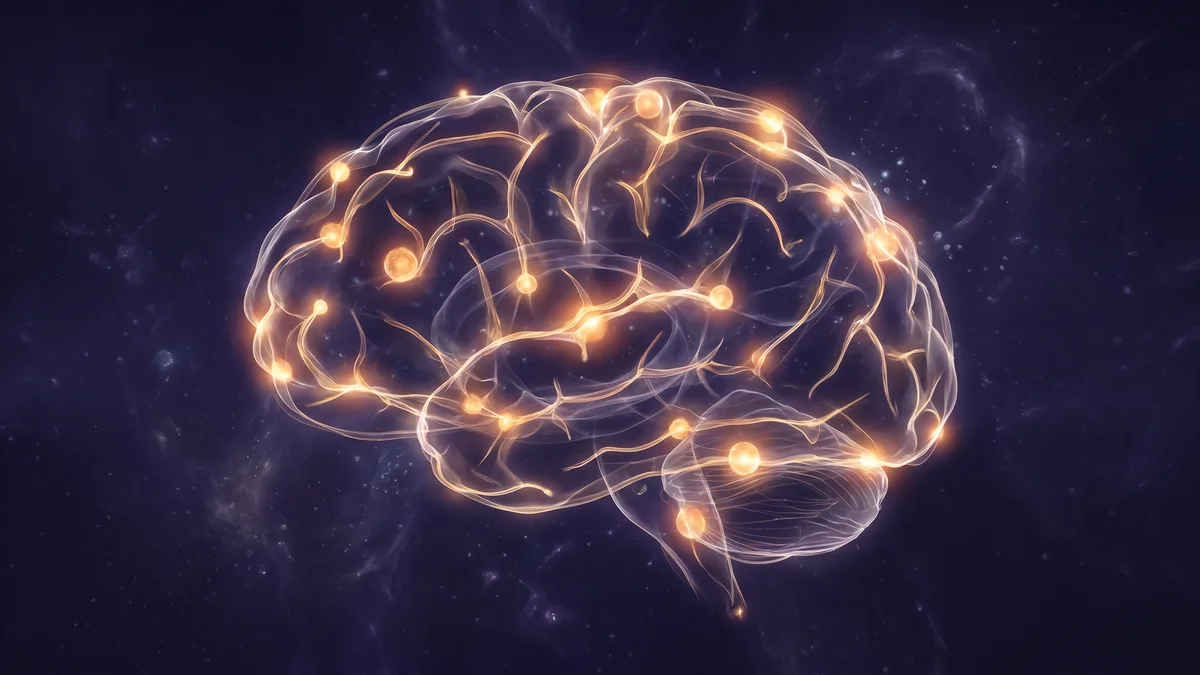
Tinnitus is not a sound. It is a signal, a message being broadcast from the deeper strata of the nervous system, and the mistake we so often make is to treat it as a problem of the ears, when it is almost always a drama unfolding within the brain. The dorsal cochlear nucleus, a knot of neurons that acts as a primary relay station for auditory information, is not merely a passive conduit for sonic data but an active interpreter, a place where the raw electrical impulses from the inner ear are shaped, filtered, and increased before being sent on their way to higher cortical centers. In my years of working in this territory, I have seen countless individuals trapped in a battle against a phantom noise, a struggle that only serves to deepen the grooves of their suffering because they are fighting the wrong war, in the wrong territory, against an enemy that isn't actually there. Stay with me here. The perception of a high-pitched whine or a relentless hiss is not a failure of the auditory periphery but a gain control issue, a biological amplifier cranked up too high in a desperate attempt to compensate for a loss of input, a phenomenon that neuroscientists are beginning to understand with ever-increasing clarity.
This increase is not a malfunction, but a feature of a system designed for adaptation, a brain that abhors a vacuum and will rush to fill any sensory void with its own creations, its own internally generated noise. It is a process that has deep evolutionary roots, a survival mechanism that ensures the brain is never truly in the dark, never without some form of input to process, even if that input is nothing more than the static of its own neural firing. The work of researchers like Rilana Cima in Cognitive Behavioral Therapy for tinnitus has illuminated the crucial role that our cognitive and emotional responses play in this increase process, demonstrating that it is our reaction to the signal, not the signal itself, that determines the degree of our distress. We become entangled in a feedback loop of attention and anxiety, a self-perpetuating cycle where the more we listen for the sound, the louder it seems to become, and the louder it becomes, the more we are compelled to listen.
"The gap between stimulus and response is where your entire life lives."
Prediction, Perception, and the Anxious Brain
The brain, at its core, is a prediction machine, a fantastically complex organ that is constantly generating models of the world and then updating those models based on incoming sensory information. As the work of Richard Davidson on the neuroscience of meditation has so elegantly shown, our emotional styles, our characteristic ways of responding to the world, are not fixed traits but malleable patterns of neural activity that can be reshaped through conscious practice. When the auditory system begins to lose its connection to the outside world, when the flow of information from the cochlea is diminished, the brain's predictive models are thrown into disarray, and it begins to generate its own reality, its own phantom sounds, to fill the void. Stick with this for a moment. This is not a sign of madness, but proof of the brain's significant creativity, its relentless drive to make sense of the world, even when the raw data is incomplete.
Something worth considering might be a Bone Conduction Pillow Speaker. Many readers have found the Chamomile Tea by Traditional Medicinals (paid link) helpful for this.
Here is where the experience of tinnitus intersects so powerfully with the broader landscape of anxiety, for what is anxiety if not the brain's prediction machinery running wild, caught in a loop of catastrophic forecasting? The same neural circuits that are involved in the generation of tinnitus are also implicated in the experience of chronic stress and worry, a fact that points to a deeper underlying dysregulation in the way the brain is processing information and managing its own internal state. We become so identified with the contents of our experience, so convinced that the ringing in our ears is an existential threat, that we lose sight of the larger context, the silent, spacious awareness in which all of this is unfolding. The path forward, then, is not to silence the noise, but to cultivate a different relationship to it, to learn to witness the unfolding of our own neural drama with a sense of compassionate detachment, a sense of observer-humor at the antics of our own predictive minds.
"The brain is prediction machinery. Anxiety is just prediction running without a stop button."
From Information to Integration
It is one thing to understand the neurobiology of tinnitus, to grasp the complex dance of excitation and inhibition in the dorsal cochlear nucleus, and it is another thing entirely to embody that understanding, to translate it into a lived experience of freedom and ease. A client once described this as feeling like they had a PhD in their own suffering, but were flunking the kindergarten of their own liberation. We can accumulate endless amounts of information about the brain, we can read all the latest research and attend all the lectures, but if that knowledge is not integrated into our moment-to-moment experience, it remains at the level of intellectual abstraction, a collection of interesting facts that does little to shift the ground of our being. The real work is to move from the head to the heart, from the realm of concepts to the direct, felt sense of the body, and to begin to cultivate a state of what we might call integrated presence.
This process of integration is not about adding anything new, but about subtracting, about letting go of the layers of resistance and identification that have accumulated around the core experience of the sound. It is about learning to soften the edges of our attention, to allow the sound to be there without constantly monitoring it, without judging it, without wishing it were different. It is a practice of radical acceptance, not as a passive resignation, but as an active, courageous engagement with the reality of the present moment, just as it is. We begin to notice the subtle ways in which our posture, our breath, our patterns of thought are all contributing to the increase of the signal, and we learn to gently, patiently, unwind those patterns, not through force of will, but through the simple, steady application of awareness.
Another option worth considering is the Jarrow Formulas B-Right Complex (paid link). A tool that often helps with this is the Debrox Ear Wax Removal Kit.
"Information without integration is just intellectual hoarding."
Your Healing Journey: Tools Worth Exploring
While there is no single solution for tinnitus, many people find that the right combination of tools and practices makes a real difference in daily life. Here are some options that align with what we have discussed in this article.
Something worth considering might be a Bone Conduction Pillow Speaker. Check out the NOW Supplements NAC 600mg (paid link) and see if it fits your situation.
A tool that often helps with this is the Debrox Ear Wax Removal Kit. Check out the Mini Stepper by Sunny Health (paid link) and see if it fits your situation.
You could also try Life Extension Zinc Caps. Check out the CoQ10 by Doctor's Best (paid link) and see if it fits your situation.
Something worth considering might be Oregon's Wild Harvest Lemon Balm. Check out the Nordic Naturals Ultimate Omega (paid link) and see if it fits your situation.
We may earn a small commission from Amazon purchases, which helps support this site at no extra cost to you.
Frequently Asked Questions
What is the difference between tinnitus and hearing loss?
While they are often related, they are not the same thing. Hearing loss is a diminished ability to perceive external sounds, often due to damage in the inner ear. Tinnitus, on the other hand, is the perception of sound when no external sound is present. It is an internally generated signal, a phantom sound created by the brain. While many people with tinnitus also have some degree of hearing loss, it is possible to have one without the other. The key distinction is that hearing loss is about what you can't hear, while tinnitus is about what you can hear, even when there is nothing to be heard.
Can meditation make my tinnitus go away?
The goal of meditation in the context of tinnitus is not to eliminate the sound, but to change your relationship to it. While some people do report a decrease in the perceived loudness or intrusiveness of their tinnitus through a consistent meditation practice, the more common and arguably more valuable outcome is a reduction in the distress and anxiety associated with the sound. Meditation helps to cultivate a state of non-reactive awareness, allowing you to observe the sound without getting caught up in the story of it, the fear of it, the resistance to it. It is a training in letting be, which, paradoxically, is often the first step toward true and lasting change.
The Tender Path of Return
The journey with tinnitus, when approached with a certain quality of attention, becomes a microcosm of the larger spiritual path, a direct and intimate encounter with the nature of perception, the habits of the mind, and the possibility of a freedom that is not dependent on external circumstances. It is a path that asks us to turn toward the difficulty, to meet the unwanted guest at the door of our awareness and to invite it in for tea, to learn its name and its story, to see what it has to teach us. It is a tender path, a path of return to the quiet, unshakable center of our own being, a center that was never lost, only temporarily obscured by the noise of our own unexamined minds. The gap between stimulus and response is where your entire life lives, and in that gap, there is a silence that is deeper than any sound, a peace that is more significant than any absence of noise.
'''