
The Conductor of the Body's Orchestra
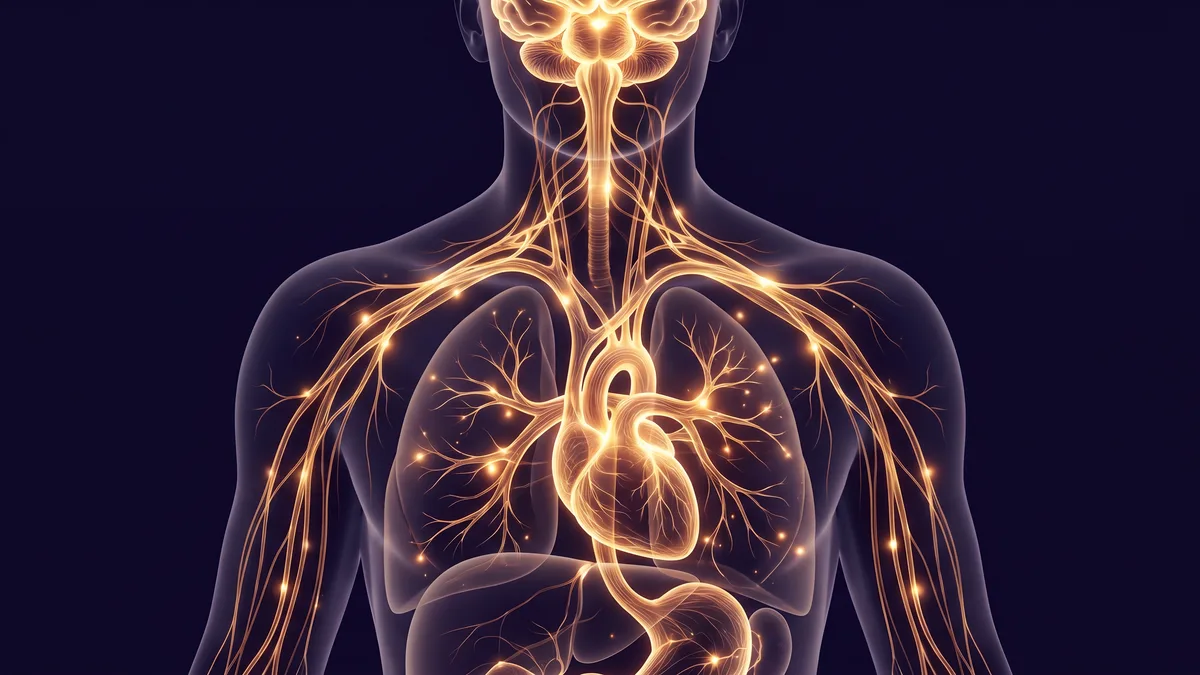
What if you could communicate directly with the part of your nervous system responsible for calm and connection? The vagus nerve, the longest and most complex of the cranial nerves, is often called the ‘wandering nerve’ because it meanders from the brainstem to the abdomen, touching nearly every major organ along the way. It is the primary channel of the parasympathetic nervous system, our body’s natural braking system, and matters a lot in everything from regulating our heart rate to managing our inflammatory response. For those living with the persistent internal noise of tinnitus, the vagus nerve represents a powerful, if often overlooked, pathway to relief. It is the conductor of the body’s orchestra, and learning to work with it can help to quiet the cacophony and restore a sense of inner harmony.
The connection between the vagus nerve and tinnitus is not just theoretical. The nerve has a direct line to the auditory system, and its state of ‘tone’ or activity can significantly influence how we perceive and react to sound. When the vagus nerve is functioning optimally, it promotes a state of safety and social engagement, which can make the tinnitus signal less intrusive and emotionally charged. However, when the nervous system is stuck in a state of chronic stress, a common experience for those with tinnitus, the vagal tone can become suppressed. This leads to a state of sympathetic dominance, where the ‘fight or flight’ response is constantly activated, making the tinnitus seem louder and more threatening. I get it. Really, I do. It feels like being trapped in a room with a fire alarm that won’t turn off. The work, then, is not to cut the wires of the alarm, but to find the switch that can reset the entire system.
A Backdoor to the Brain
Vagus nerve stimulation (VNS) is a medical procedure that involves implanting a small device, similar to a pacemaker, that sends mild electrical pulses to the vagus nerve in the neck. It’s a kind of backdoor to the brain, a way of directly influencing the neural circuits involved in stress, mood, and sensory processing. Initially approved for the treatment of epilepsy and depression, researchers have begun to explore its potential for a range of other conditions, including tinnitus. The work of researchers like Berthold Langguth, a leading figure in the field of neuromodulation for tinnitus, has been instrumental in advancing our understanding of how VNS might work for this condition. The theory is that by stimulating the vagus nerve, we can promote neuroplasticity, the brain’s ability to reorganize itself, and encourage the auditory cortex to ‘unlearn’ the tinnitus signal.
One of the most promising approaches combines VNS with targeted sound therapy. In this model, the VNS device is activated at the same time that the patient is exposed to a series of different tones. The idea is to pair the vagal nerve stimulation, which creates a state of heightened neuroplasticity, with the auditory input, essentially telling the brain, ‘Pay attention. This is important.’ By repeatedly pairing the VNS with sounds other than the patient’s specific tinnitus frequency, the brain can be encouraged to remap the auditory cortex and reduce the hyperactivity that is thought to underlie the tinnitus signal. It’s a sophisticated form of neural retraining, a way of using the body’s own mechanisms to heal the brain.
A tool that often helps with this is Jarrow Formulas B-Right Complex. Many readers have found the Jarrow Formulas B-Right Complex (paid link) helpful for this.
"The paradox of acceptance is that nothing changes until you stop demanding that it does."
Beyond the Implant: Non-Invasive Approaches
While implantable VNS devices have shown promise, they are an invasive and expensive option that is not suitable for everyone. Fortunately, there is a growing field of non-invasive VNS techniques that aim to stimulate the vagus nerve through the skin, without the need for surgery. These devices typically target the auricular branch of the vagus nerve, which is located in and around the ear. By clipping a small electrode to the ear and delivering a mild electrical current, it is possible to activate the vagal pathways and influence brain activity. Let that land for a second. We can access this powerful nerve through a simple, non-invasive method. This opens up a world of possibilities for self-regulation and home-based therapies.
In my years of working in this territory, I have seen a growing interest in these non-invasive approaches. While the research is still in its early stages, the initial results are encouraging. Some studies have shown that non-invasive VNS can lead to significant reductions in tinnitus loudness and distress. It is not a magic bullet. Like all tinnitus therapies, it is likely to be most effective when combined with other approaches, such as sound therapy, counseling, and lifestyle modifications. But it represents a significant step forward in our ability to support individuals to take an active role in their own healing journey. It is a way of putting the tools of neuromodulation directly into the hands of the people who need them most.
The Power of the Breath
Perhaps the most accessible and powerful way to stimulate the vagus nerve is through the breath. The vagus nerve is intimately connected to the diaphragm, the primary muscle of respiration. When we take long, slow, deep breaths, we are sending a direct signal to our vagus nerve that we are safe and that it is okay to relax. This is the physiological basis for the calming effects of practices like yoga, meditation, and tai chi. They are all, in their own way, forms of vagal nerve stimulation. The simple act of extending your exhale so that it is longer than your inhale can have a significant impact on your nervous system, shifting you out of a state of sympathetic arousal and into a state of parasympathetic calm.
Another option worth considering is the Chamomile Tea by Traditional Medicinals (paid link). You could also try a Relaxation Herbal Tea Sampler.
This is not just about relaxation. It is about regulation. It is about learning to consciously influence the state of your own nervous system. For someone with tinnitus, this can be a game-changer. Instead of feeling like a helpless victim of a runaway nervous system, you can become an active participant in your own well-being. You can learn to use your breath as an anchor, a tool to ground you in the present moment and to soothe the flames of the stress response. It is a practice of coming home to the body, of finding a place of safety and refuge within yourself, no matter what is happening in your internal or external environment.
"Stillness is not something you achieve. It's what's already here beneath the achieving."
A Symphony of Self-Care
Working with the vagus nerve is not a singular technique, but a whole-person approach to well-being. It is about creating a lifestyle that supports a healthy vagal tone. This includes not just practices like deep breathing and meditation, but also things like gentle exercise, spending time in nature, gargling, humming, and connecting with loved ones. Each of these activities, in its own way, sends a signal of safety to the nervous system, strengthening the vagal brake and making it easier to navigate the challenges of tinnitus. It is about composing a symphony of self-care, a rich and varied fabric of practices that nourish the nervous system and promote a state of balance and ease.
The journey with tinnitus is a deeply personal one, and what works for one person may not work for another. But by understanding the role of the vagus nerve, we can all begin to explore the ways in which we can work with our own physiology to find relief. It is a path of empowerment, a path of self-discovery, and a path that can lead us to a place of greater peace and well-being, not by silencing the noise, but by learning to listen to the wisdom of our own bodies.
"There's a meaningful difference between self-improvement and self-understanding. One adds. The other reveals."
Your Healing Journey: Tools Worth Exploring
While there is no single solution for tinnitus, many people find that the right combination of tools and practices makes a real difference in daily life. Here are some options that align with what we have discussed in this article.
A tool that often helps with this is Jarrow Formulas B-Right Complex. Check out the Jarrow Formulas B-Right Complex (paid link) and see if it fits your situation.
You could also try a Relaxation Herbal Tea Sampler. Check out the Jarrow Formulas B-Right Complex (paid link) and see if it fits your situation.
We may earn a small commission from Amazon purchases, which helps support this site at no extra cost to you.
Frequently Asked Questions
Is Vagus Nerve Stimulation safe?
Implantable VNS is a surgical procedure and carries the same risks as any surgery. The most common side effects are hoarseness and a tingling sensation in the neck during stimulation. Non-invasive VNS is generally considered very safe, with minimal side effects, though it's important to use devices as directed and consult with a healthcare professional.
How long does it take for VNS to work for tinnitus?
The effects of VNS for tinnitus are not immediate. Research suggests that it may take several weeks or even months of consistent use, often in conjunction with sound therapy, to see significant improvements. The goal is to promote long-term neuroplastic changes in the brain, which is a gradual process.