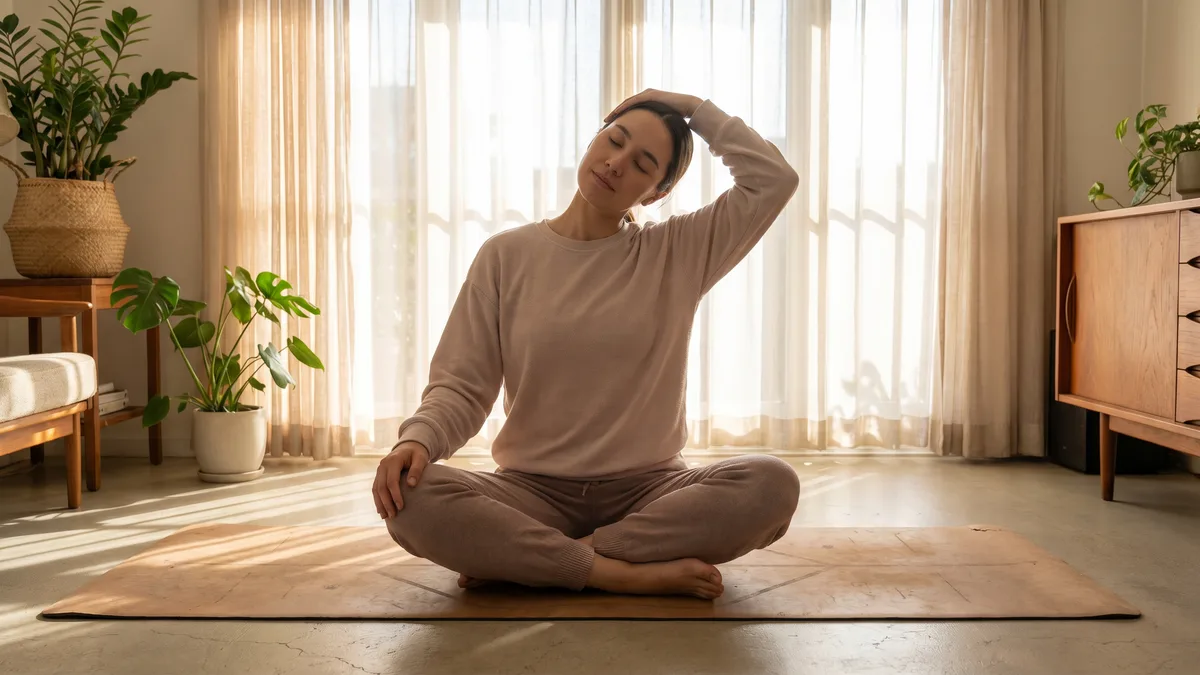

Your Bedroom is Not a Battlefield
Your bedroom, the one place on earth that is supposed to be a sanctuary of rest and renewal, has likely become something else entirely, a carefully managed environment, a laboratory of sound, a battlefield where the enemy is the silence of the night. This is the provocative truth we must begin with. We treat our bedrooms not as places of surrender, but as strategic command centers in our ongoing war against the internal noise of tinnitus, a war that we are, by definition, destined to lose, because the enemy we are fighting is a part of ourselves. Every blackout curtain, every sound-dampening panel, every new-age gadget promising a silent night is another piece of armor in a battle that can only be won by laying down our arms.
We have been conditioned to believe that control is the pathway to peace, that if we can just manage our external environment with enough precision, we can arrange a sense of internal calm. We adjust the thermostat, we choose the thread count of our sheets, we select the perfect playlist of soothing sounds, all in the desperate hope that we can construct a fortress of comfort that is impervious to the chaos of our own nervous system. But the tinnitus, in its relentless and unwavering presence, reveals the folly of this approach. It is the ghost in the machine of our carefully constructed reality, a constant reminder that true peace is not about control, but about surrender.
The Tyranny of the Perfect Environment
The quest for the perfect tinnitus-friendly bedroom is a seductive one, a seemingly practical and proactive way to address a problem that so often feels intractable. We read the articles, we follow the advice, we turn our personal spaces into optimized zones of sensory deprivation. We eliminate all sources of light, we banish all electronic devices, we create a cocoon of quiet that is, in theory, the ideal environment for sleep. But here is what gets interesting. This very act of creating a sterile and controlled environment can often have the opposite effect, turning the bedroom into a place of heightened anxiety and vigilance.
The more we try to eliminate all external stimuli, the more our brain, in its relentless search for something to latch onto, will increase the internal signal of the tinnitus. The silence we have so carefully engineered becomes a blank canvas upon which the tinnitus can paint its masterpiece of irritation. It is a classic case of the solution becoming the problem, a well-intentioned effort that inadvertently strengthens the very neural pathways we are trying to weaken. The bedroom, instead of being a place of rest, becomes a place of performance, a stage upon which we either succeed or fail at the task of falling asleep.
In my years of working with people in this territory, I have seen how this pursuit of the perfect environment can become a form of obsession, another layer of striving and effort that keeps the nervous system in a state of low-grade activation. The focus on getting the conditions just right creates a subtle but persistent pressure, a sense that “I can only relax if everything is perfect.” This is not a recipe for rest; it is a recipe for performance anxiety. The path to a more peaceful night is not about creating a perfect environment, but about cultivating a perfect sense of acceptance for the environment as it is.
Something worth considering might be the TriggerPoint GRID Foam Roller. Many readers have found the Chamomile Tea by Traditional Medicinals (paid link) helpful for this.
A Room for Living, Not for Hiding
So what is the alternative? Do we simply abandon all efforts to create a comfortable and restful bedroom? Not at all. The invitation is not to neglect our environment, but to approach it with a different intention. Instead of trying to create a sterile and sound-proofed bunker, what if we were to create a bedroom that is rich and inviting, a place that we actually want to be in, a place that feels like a warm and welcoming embrace rather than a sterile and clinical treatment room? What if we were to fill our bedrooms with things that we love, with textures and scents and colors that bring us a sense of joy and ease?
This is a radical departure from the conventional wisdom, which so often treats the bedroom as a functional space with a single purpose: to help sleep. But the bedroom is not just a sleep chamber; it is a room for living. It is a place for intimacy, for reading, for quiet contemplation, for simply being. When we strip it of all its personality and turn it into a sterile and functional space, we are sending a subtle but powerful message to our nervous system: “This is a place of anxiety, a place where we have to be careful.”
Freedom is not the absence of constraint. It\'s the capacity to choose your relationship to it.
A client once described the shift in her approach as moving from a “tinnitus-proof” bedroom to a “life-friendly” one. She brought in plants, she hung art that she loved, she invested in soft, luxurious bedding, she created a space that felt like a reflection of her own aliveness rather than a monument to her affliction. And in doing so, she found that the bedroom became a place she looked forward to being in, a place where she felt safe and held, and as a natural consequence of this, she began to sleep better. The tinnitus was still there, but it was no longer the defining feature of the room. It was just one small element in a much richer and more inviting sensory landscape.
The Neuroscience of Attention
Here is where the work of a thinker like Sam Harris becomes so relevant. As a neuroscientist and a long-time practitioner of meditation, he has a unique perspective on the power of attention to shape our reality. He would argue that what we pay attention to, and how we pay attention to it, is the single most important factor in determining the quality of our lives. We can have a bedroom that is objectively “perfect” for sleep, but if our attention is habitually locked onto the sound of the tinnitus and the story of our suffering, we will not find rest.
Harris’s work in the field of secular meditation offers a practical and non-religious framework for training our attention. He teaches that we can learn to observe our thoughts and sensations without being consumed by them, to recognize them as transient events in consciousness rather than as defining features of who we are. Bear with me on this one. From this perspective, the sound of the tinnitus is just that: a sound. It is a pattern of neural firing in the auditory cortex, a raw sensory datum that has no inherent meaning or significance. It is our attention, our interpretation, our story about the sound that creates the suffering.
Another option worth considering is the Jarrow Formulas B-Right Complex (paid link). You could also try the Bedtime Bliss Contoured Sleep Mask.
Every moment of genuine attention is a small act of liberation.
When we can bring a quality of mindful attention to our experience in the bedroom, we begin to untangle ourselves from the reactive patterns that keep us stuck. We can notice the sound of the tinnitus without needing it to go away. We can notice the feeling of anxiety in our body without believing the story that it tells. We can notice the desire for sleep without turning it into a desperate and demanding craving. Each moment that we can rest in this open, non-judgmental awareness is a moment of freedom, a small but significant act of reclaiming our own minds.
Your Healing Journey: Tools Worth Exploring
While there is no single solution for tinnitus, many people find that the right combination of tools and practices makes a real difference in daily life. Here are some options that align with what we have discussed in this article.
Something worth considering might be the TriggerPoint GRID Foam Roller. Check out the NOW Supplements NAC 600mg (paid link) and see if it fits your situation.
You could also try the Bedtime Bliss Contoured Sleep Mask. Check out the Mini Stepper by Sunny Health (paid link) and see if it fits your situation.
For those looking for a simple solution, the Bose QuietComfort Ultra is worth a look. Check out the Bose QuietComfort Ultra Headphones (paid link) and see if it fits your situation.
A popular choice for situations like this is the Chirp Wheel Back Roller. Check out the CoQ10 by Doctor's Best (paid link) and see if it fits your situation.
We may earn a small commission from Amazon purchases, which helps support this site at no extra cost to you.
Frequently Asked Questions
What are some practical things I can do to make my bedroom more tinnitus-friendly without turning it into a sterile environment?
Instead of focusing on eliminating all sound and light, think about adding things that create a sense of comfort and ease. This could include soft, natural fabrics for your bedding and curtains, a low-wattage lamp with a warm-colored bulb for reading, or a diffuser with a calming essential oil like lavender or chamomile. The goal is to create a space that feels like a sanctuary, a place that you associate with relaxation and pleasure rather than with anxiety and struggle. It is about creating a positive sensory experience that can compete with the negative sensory experience of the tinnitus.
Is it a good idea to have a television in the bedroom if I have tinnitus?
Most sleep experts would advise against having a television in the bedroom, as the blue light from the screen can interfere with the production of melatonin, the hormone that regulates sleep. Also, the content of what you are watching can be stimulating and can keep your mind active when it should be winding down. If you find that the sound of the television helps to distract you from the tinnitus, you might consider experimenting with a sound machine or a podcast instead, as these can provide a similar level of auditory engagement without the disruptive effects of the screen.
The Unfolding Stillness
We begin this journey with the belief that we need to create a perfect environment in order to find peace, that we need to control the world around us in order to quiet the world within us. We declare war on our own bedrooms, turning them into sterile and functional spaces that reflect our fear rather than our aliveness. But the path to a restful night, the path to a more peaceful life, is not about control, but about connection. It is about creating a space that feels like a loving and supportive partner in our journey, a space that holds us in all of our vulnerability and all of our strength.
Consciousness doesn\'t arrive. It\'s what\'s left when everything else quiets down.
The great secret is that the peace we are seeking is not something that can be constructed or engineered. It is not something that can be found in the perfect pillow or the perfect sound machine. It is an inherent quality of our own being, a deep and abiding stillness that is always and already here, waiting for us beneath the surface of our restless minds. The work is not to create this stillness, but to create the conditions that allow it to be revealed. The work is to quiet down enough to hear the silence that has been here all along.
This is the tender invitation of the tinnitus-friendly bedroom. It is a call to turn our attention away from the frantic search for solutions and toward the simple and significant act of creating a space that nourishes our soul. It is a call to trust that when we create a space that is filled with beauty and with love, a space that feels like a true sanctuary, the rest that we have been so desperately seeking will naturally and effortlessly arise to meet us there.