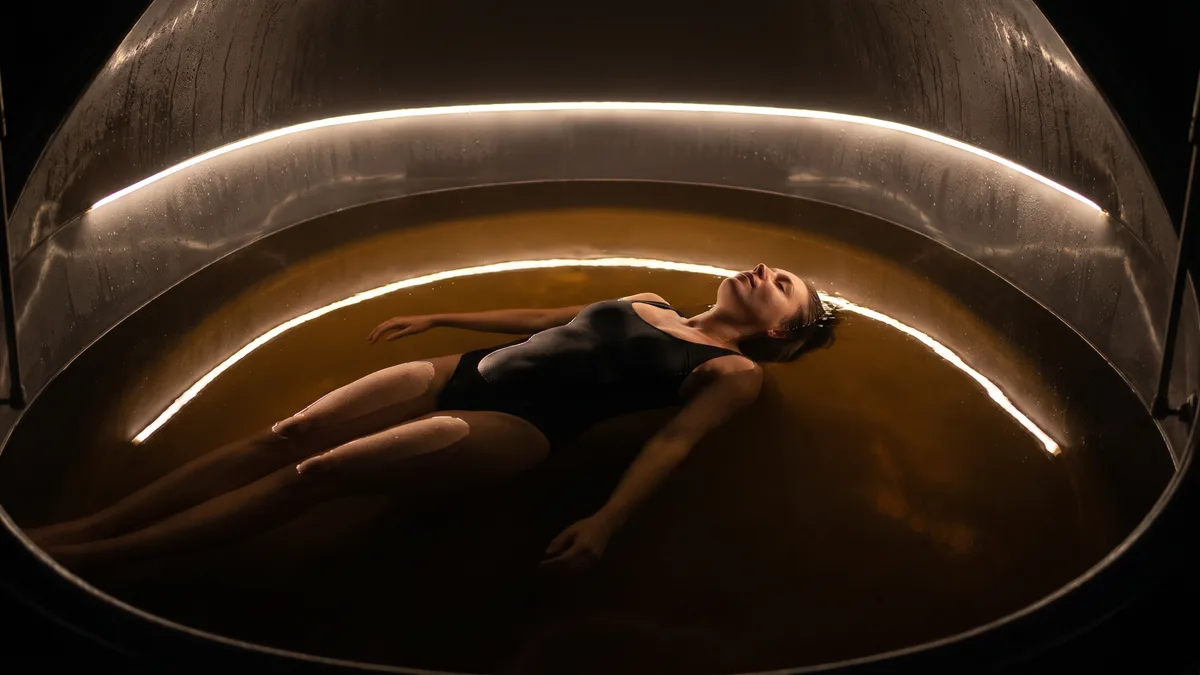

Listening Beyond Sound: Entering the Realm of Body Awareness
The experience of tinnitus often resides not only in our ears but in the complex interplay of our nervous system’s response to sound - or its absence. When the persistent internal ringing or buzzing becomes more than an auditory phenomenon, it transforms into an emotional and bodily presence that shapes our everyday experience. Body-based meditation invites one to step away from the mental noise and into a delicate awareness of sensations and rhythms that quietly coexist beneath the surface of thought. In doing so, it cultivates an ability to observe tinnitus not as an adversary but as a phenomenon unfolding within the living terrain of the body.
"The body remembers what the mind would prefer to file away."
It’s a powerful notion that connects deeply when we peer into the somatic aspects of tinnitus distress. The tensions in the neck, the subtle gripping beneath the collarbones, or the overall heightened vigilance of the nervous system carry, in their quiet way, the scars and sensitivities that thought might hope to suppress or rationalize away. When we turn our attention to these body signals with gentle curiosity, we begin to bypass the mind’s habitual loops of worry and frustration.
The Nervous System’s Role: From Porges to Jastreboff
Stephen Porges, with his Polyvagal Theory, articulates how the nervous system’s state significantly influences our perception of threat or safety. In tinnitus, the nervous system often dwells in a heightened state of alert, interpreting the persistent sound as an ongoing danger. This state triggers a cascade of physiological reactions - muscular tension, increased heart rate, and emotional reactivity - that compounds the experience. Similarly, the work of Pawel Jastreboff reorients us to the idea that tinnitus becomes distressing largely through the brain’s interpretation and emotional coloring of the sound rather than the sound signal itself.
Body-based meditation gently persuades the nervous system to move toward a state of parasympathetic engagement, enabling a downshift from chronic stress arousal. As one literally breathes into the body’s sensations without judgment, the nervous system can reclassify the internal buzzing not as a threat but as neutral background. It’s not a quick leap but a gradual unwinding - precisely what makes such an approach radical in its simplicity.
Anchoring Attention in Sensation: The Practice Unfolds
In my years of working within this territory, I’ve noticed how sitting with the body’s subtle signals often proves more accessible than wrestling directly with the mind’s cacophony. Imagine tuning into the gentle rise and fall of the abdomen or the weight of the feet on the floor. This somatic anchor offers a point of refuge amid tinnitus’ intrusive presence. It allows one to observe the sound from a less charged space, transforming it from something to be battled into something simply noticed.
Surprisingly, as the body begins to settle, the mind may reluctantly release some of its grip. Yet it can be a rocky process; initially, one might feel more agitated or restless. Such moments are not setbacks. As Tara Brach often reminds us, it is precisely this willingness to meet discomfort without needing to escape that holds the potential for genuine ease to emerge.
Something worth considering might be The Body Keeps the Score. Many readers have found the The Body Keeps the Score by Bessel van der Kolk (paid link) helpful for this.
"Sit with it long enough and even the worst feeling reveals its edges."
The Interface of Neuroscience and Ancient Wisdom
The convergence of neuroscience with meditative traditions such as Buddhism or Vedanta offers fertile ground for understanding why body-based meditation is effective. Neuroscientific research showcases how focused somatic attention engages brain regions associated with emotional regulation, such as the prefrontal cortex, while quieting the amygdala’s threat response. Likewise, meditative disciplines teach a form of witnessing presence that transcends narrative and enters an embodied silence.
One might say that this type of practice is less about fixing or eradicating tinnitus distress and more about radically changing the relationship to it. As Jon Kabat-Zinn’s mindfulness training elucidates, awareness imbued with kindness rewrites the neural pathways that once solidified anxiety and resistance into entrenched patterns. The nervous system, it turns out, is highly malleable to the quality of our attention.
Integration Is the Opposite of Hoarding
There is often a temptation to approach tinnitus distress intellectually, collecting information and strategies without deeper, somatic assimilation. Yet without the body’s involvement, this approach remains incomplete. As I often say,
"Information without integration is just intellectual hoarding."
When one brings body-based meditation alongside intellectual understanding, a fuller, more embodied wisdom can arise. This synthesis allows an individual not simply to know about tinnitus but to inhabit a different way of being with its presence - less reactive, more spacious, and ultimately more free.
Another option worth considering is the Chamomile Tea by Traditional Medicinals (paid link). One option that many people like is doTERRA Lavender Essential Oil.
The Subtle Art of Patience in Body-Based Meditation
Patience is perhaps the most radical element in this practice. Unlike quick fixes or distraction techniques that aim to silence the tinnitus immediately, body-based meditation cultivates a slow unfolding awareness. Such patience invites us to discover not only the edges of suffering but also the emergence of grace within difficulty. One learns over time that the body and mind's habitual patterns can gently loosen without force.
Oh, yes, it can be deeply challenging at times - moments arise when the noise seems louder, the body more restless. And yet, the very act of returning, again and again, to embodied attention holds a promise that conventional treatments often cannot match. Simple enough.
Embodied Presence as a Gateway to Freedom
Ultimately, body-based meditation opens us to a way of listening that is deeper than sound itself. It invites an attunement to presence that encompasses tinnitus yet does not become overwhelmed by it. In practice, this means inhabiting each moment with fullness, whatever the internal landscape may be. I've sat with people who described this process as moving from isolation to connection - both with themselves and the wider world.
Such medicine, drawn from time-honored practices, neuroscientific insights, and lived experience, offers a hopeful path. Through the body’s intelligence, one may find an unexpected refuge, a place where tinnitus distress no longer holds absolute sway.
Your Healing Journey: Tools Worth Exploring
While there is no single solution for tinnitus, many people find that the right combination of tools and practices makes a real difference in daily life. Here are some options that align with what we have discussed in this article.
Something worth considering might be The Body Keeps the Score. Check out the The Body Keeps the Score by Bessel van der Kolk (paid link) and see if it fits your situation.
One option that many people like is doTERRA Lavender Essential Oil. Check out the Jarrow Formulas B-Right Complex (paid link) and see if it fits your situation.
One option that many people like is Waking Up by Sam Harris. Check out the Waking Up by Sam Harris (paid link) and see if it fits your situation. It adds up.
We may earn a small commission from Amazon purchases, which helps support this site at no extra cost to you.
Frequently Asked Questions
How does body-based meditation differ from mindfulness of thoughts regarding tinnitus?
While mindfulness of thoughts seeks to observe mental patterns, body-based meditation anchors attention in bodily sensations, offering a distinct pathway to engage the nervous system and reduce reactivity. This somatic focus helps bypass cognitive loops that often increase tinnitus distress.
Can body-based meditation replace medical treatments for tinnitus?
Body-based meditation complements but does not replace medical evaluation and treatment. It works best as part of a broader approach, addressing the nervous system’s role in distress and enhancing overall well-being alongside conventional care. No question.
How long does it usually take before one notices benefits from practicing body-based meditation?
There is no fixed timeline; benefits often emerge gradually over weeks or months of consistent practice. Patience and gentle consistency allow the nervous system time to adapt, leading to shifts in perception and emotional responses toward tinnitus.