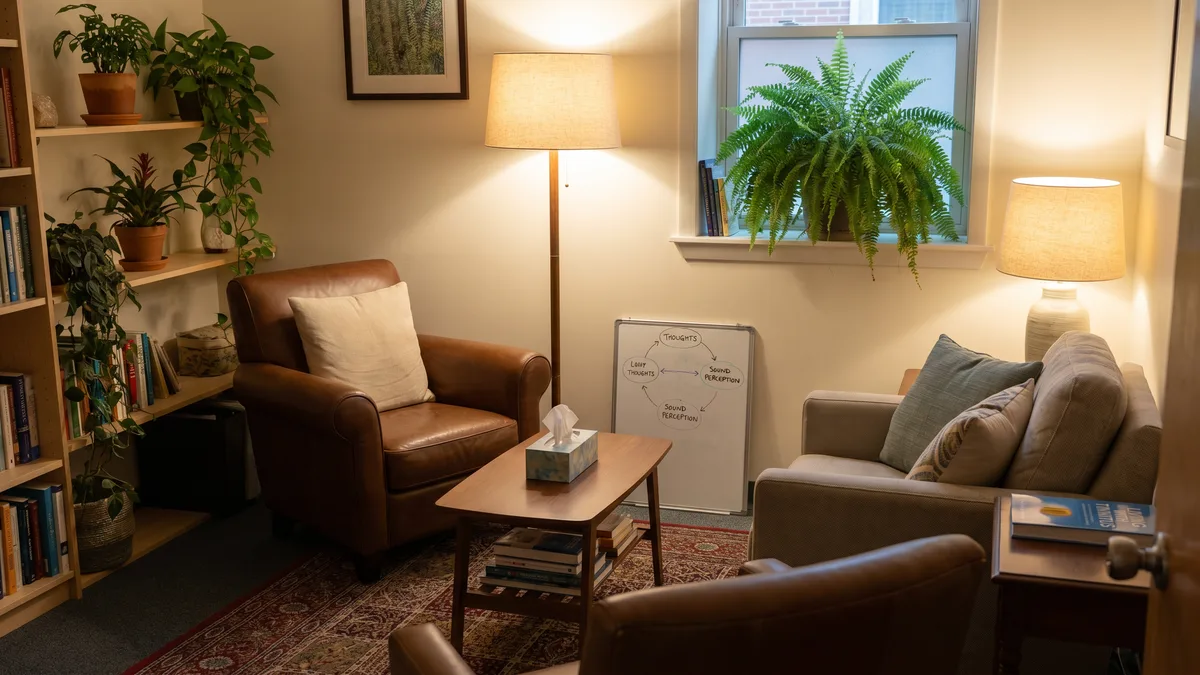

The Three O’Clock Wake-Up Call
The digital clock on the bedside table glows a merciless 3:17 AM, and the world outside is as quiet as it will ever be, a thick blanket of silence that serves only to increase the high-pitched electrical hum that has taken up residence between your ears. This is the witching hour for the tinnitus sufferer, the moment when the quiet of the night becomes an adversary, when the absence of external sound creates a stark, empty stage for the relentless solo performance of your own auditory system. You’ve tried everything, the white noise machine, the herbal tea, the lavender-scented pillow spray, all the recommended rituals of sleep hygiene, yet here you are, wide awake, a captive audience to a sound that no one else can hear. The frustration is a palpable thing, a hot, tight knot in your chest, a feeling of being betrayed by your own body.
We have been taught to view sleep as a state of absence, an absence of light, an absence of sound, an absence of conscious thought. But for the person living with tinnitus, the night is not an absence but a presence, a presence of a sound that is both intimate and alien, a constant companion that refuses to be ignored. This part surprised me too. The more we fight it, the more we struggle against it, the more we feed it with our attention and our frustration, the louder it seems to become. It is a cruel paradox, a feedback loop from which there seems to be no escape. The desperate desire for silence becomes the very thing that makes the noise unbearable.
In my years of working with people in this territory, I have come to see that the path to a restful night’s sleep with tinnitus is not about finding a way to silence the sound, but about changing our relationship to it. It is about learning to meet the sound with a quality of attention that is spacious, accepting, and even a little bit curious. It is about understanding that the suffering is not in the sound itself, but in our resistance to it. This is a radical shift in perspective, a move away from the battlefield of the bedroom and toward a more gentle and compassionate approach to our own experience.
The Myth of the Quiet Mind
We are sold a bill of goods in our culture, the idea that in order to find peace, in order to sleep, we must first achieve a state of perfect mental silence, a blank slate free from all thought and sensation. We are told to “clear our minds,” as if our consciousness were a dusty attic to be swept clean. But the mind is not designed to be silent. It is a meaning-making machine, a constant generator of thoughts, feelings, and sensations, and the attempt to shut it off is a fool’s errand, a recipe for endless frustration. The ringing in our ears is just one more object in the vast and ever-changing landscape of our awareness, and our attempt to banish it is what gives it so much power over us.
Here is where the work of a teacher like Tara Brach becomes so significantly helpful. Her teachings on radical acceptance, and the RAIN technique in particular, offer a practical and compassionate pathway for working with difficult experiences, including the relentless presence of tinnitus at three in the morning. RAIN is an acronym that stands for Recognize, Allow, Investigate, and Nurture, a four-step process for meeting our inner experience with mindfulness and compassion. It is not about fixing or changing what is happening, but about learning to be with it in a new way, a way that does not add a second layer of suffering, the suffering of resistance, on top of the primary discomfort of the sound itself.
The gap between stimulus and response is where your entire life lives.
When we are lying in bed, caught in the grip of tinnitus-fueled insomnia, the stimulus is the sound itself. The response is our habitual pattern of fear, frustration, and despair. The gap between the two is where our freedom lies. It is in that gap that we can choose to respond differently, to meet the sound with the gentle and spacious attention of RAIN, to recognize its presence without judgment, to allow it to be there without resistance, to investigate the sensations in our body with a gentle curiosity, and to offer ourselves a gesture of nurturing and self-compassion. Wild, right?
Something worth considering might be the Bose Sleepbuds II. Many readers have found the Chamomile Tea by Traditional Medicinals (paid link) helpful for this.
A Different Kind of Listening
Let’s walk through what this might look like in practice. You are in bed, the ringing is loud, and your mind is starting to spin its familiar stories of despair. The first step, Recognize, is simply to acknowledge what is happening. “Ah, this is tinnitus. The ringing is here.” There is no need to judge it or to wish it were different. It is a simple, factual acknowledgment of your present-moment reality. The second step, Allow, is to let the experience be there, just as it is. This is often the most challenging step, as our every instinct is to push it away. But can we, just for a moment, soften the resistance? Can we let the sound be there, without needing it to go away?
The third step, Investigate, is to bring a gentle, non-judgmental curiosity to the direct, physical sensations of the experience. What does the sound actually feel like in your body? Is it a vibration? A pressure? A tingling? Where do you feel the resistance to the sound? Is it a tightness in your jaw? A clenching in your stomach? A heat in your chest? We are not trying to analyze the sound or to figure out why it is there. We are simply exploring the raw, sensory data of our experience with the gentle curiosity of a scientist. A client once described this as moving from being the victim of the sound to being the observer of it.
The final step, Nurture, is to offer ourselves a gesture of kindness and compassion. This could be placing a hand on your heart, or whispering a silent phrase of comfort to yourself, such as “This is difficult, and I am here with you.” It is an acknowledgment of the suffering that is present, and a conscious choice to meet that suffering with love rather than with more resistance. It is a way of reparenting ourselves in the midst of our pain, of offering ourselves the same kindness and care that we would offer to a beloved friend who was struggling.
The Landscape of Experience
This practice of RAIN is not a magic trick. It will not necessarily make the tinnitus disappear. But what it can do, over time, is to fundamentally shift your relationship to it. It can create a sense of spaciousness around the sound, so that it is no longer the center of your universe, but simply one object among many in the vast landscape of your experience. The sound may still be there, but it no longer has the power to define your reality, to hold you captive in a state of fear and frustration. You learn that you can be with the sound, and still be okay. You learn that you can be with the sound, and still find rest.
The algorithm of your attention determines the landscape of your experience.
When our attention is habitually locked onto the tinnitus, the landscape of our experience becomes small and constricted, a barren and hostile place. But when we learn to widen the lens of our attention, to include the sensations of our breath, the feeling of the blankets on our skin, the gentle rise and fall of our own chest, the tinnitus becomes just one feature in a much larger and more varied landscape. It is still there, but it is no longer the whole picture. We begin to discover that there is a quiet, unwavering presence, a field of awareness that is untouched by the sound, a place of deep and abiding peace that is always and already here.
This is the great secret that is hidden in plain sight, the truth that all the contemplative traditions point to. What we are looking for is not a different experience, but a different way of being with our experience. We are not trying to rearrange the furniture in a burning house, to find the perfect pillow or the perfect sound machine to distract us from our discomfort. We are learning to sit in the midst of the fire, to feel its heat without being consumed by it, to find the un-burnable essence of our own being. It is a practice for a lifetime, and it is a practice that can begin right here, right now, in the midst of whatever is arising.
Another option worth considering is the Jarrow Formulas B-Right Complex (paid link). One option that many people like is the Philips SmartSleep Wake-Up Light.
Your Healing Journey: Tools Worth Exploring
While there is no single solution for tinnitus, many people find that the right combination of tools and practices makes a real difference in daily life. Here are some options that align with what we have discussed in this article.
Something worth considering might be the Bose Sleepbuds II. Check out the NOW Supplements NAC 600mg (paid link) and see if it fits your situation.
One option that many people like is the Philips SmartSleep Wake-Up Light. Check out the Mini Stepper by Sunny Health (paid link) and see if it fits your situation.
We may earn a small commission from Amazon purchases, which helps support this site at no extra cost to you.
Frequently Asked Questions
Is it better to have complete silence or some background noise when trying to sleep with tinnitus?
For most people, complete silence is not helpful, as it can make the tinnitus seem more prominent. A quiet, neutral background sound, often referred to as a “sound cushion,” can be very effective. The goal is not to mask the tinnitus completely, but to blend with it, to create a gentle, soothing soundscape that gives your brain something else to listen to. This could be a fan, an air purifier, or a sound machine set to a gentle, broadband sound like pink noise or the sound of rain. The ideal volume is one where the tinnitus is still audible, but is no longer the most prominent sound in the room.
What is the RAIN technique and how can it help with sleep?
RAIN is a mindfulness practice developed by meditation teacher Tara Brach. It is an acronym for Recognize, Allow, Investigate, and Nurture. When you are struggling to sleep due to tinnitus, you can use RAIN to work with the difficult emotions and sensations that are arising. You Recognize that the tinnitus and the frustration are present. You Allow them to be there, without resistance. You Investigate the physical sensations with a gentle curiosity. And you Nurture yourself with a gesture of self-compassion. This process can help to break the cycle of reactive suffering and create a more peaceful and accepting inner environment, which is more conducive to sleep.
Should I avoid caffeine and alcohol if I have tinnitus?
Both caffeine and alcohol can have a significant impact on the nervous system and can, for some people, exacerbate tinnitus. Caffeine is a stimulant that can increase alertness and make it more difficult to sleep, while alcohol, although it may initially make you feel sleepy, can disrupt the quality of your sleep later in the night. It is a good idea to experiment with reducing or eliminating your intake of both, particularly in the hours before bedtime, to see if it makes a difference for you. Keeping a simple journal can be helpful in tracking how these substances affect your tinnitus and your sleep.
Can certain sleeping positions make tinnitus worse?
While sleeping position is not a direct cause of tinnitus, it can sometimes have an influence on its perceived loudness. For some people, sleeping with their head raised on a couple of pillows can be helpful, as it can reduce congestion and pressure in the head and ears. If you have unilateral tinnitus (in one ear), you might find it more comfortable to sleep with the affected ear facing up, away from the pillow. Ultimately, the best sleeping position is the one that allows you to feel most comfortable and relaxed. Experiment with different positions and pillows to find what works best for you.
The Presence of Attention
We begin this nightly struggle with the belief that silence is the goal, that the absence of noise is the prerequisite for rest. We chase it, we crave it, we curse its absence. But the journey with tinnitus, particularly in the quiet hours of the night, teaches us a different truth, a more subtle and significant understanding of what it means to be at peace. It teaches us that true silence is not the absence of noise, but the presence of a particular quality of attention, a spacious and unwavering awareness that can hold all the sounds of our life, both internal and external, with a gentle and loving embrace.
Silence is not the absence of noise. It's the presence of attention.
The ringing is not the enemy. The sleeplessness is not the enemy. The only enemy is our own resistance, our own frantic and futile struggle against the reality of the present moment. When we can finally lay down the weapons of our resistance, when we can soften into the experience as it is, we discover a peace that is not dependent on conditions, a peace that is always and already here, waiting for us beneath the surface of our restless minds. It is the peace of our own true nature, and it is a peace that can hold even the most relentless of sounds.
This is the tender invitation of the sleepless night. It is a call to a deeper intimacy with ourselves, a call to meet our own vulnerability with a strength that is not brittle, but soft, a strength that is found not in fighting, but in yielding. It is in this yielding, this gentle and courageous surrender to the truth of our own experience, that we can finally find the rest that we have been so desperately seeking, a rest that is not just for the body, but for the soul.