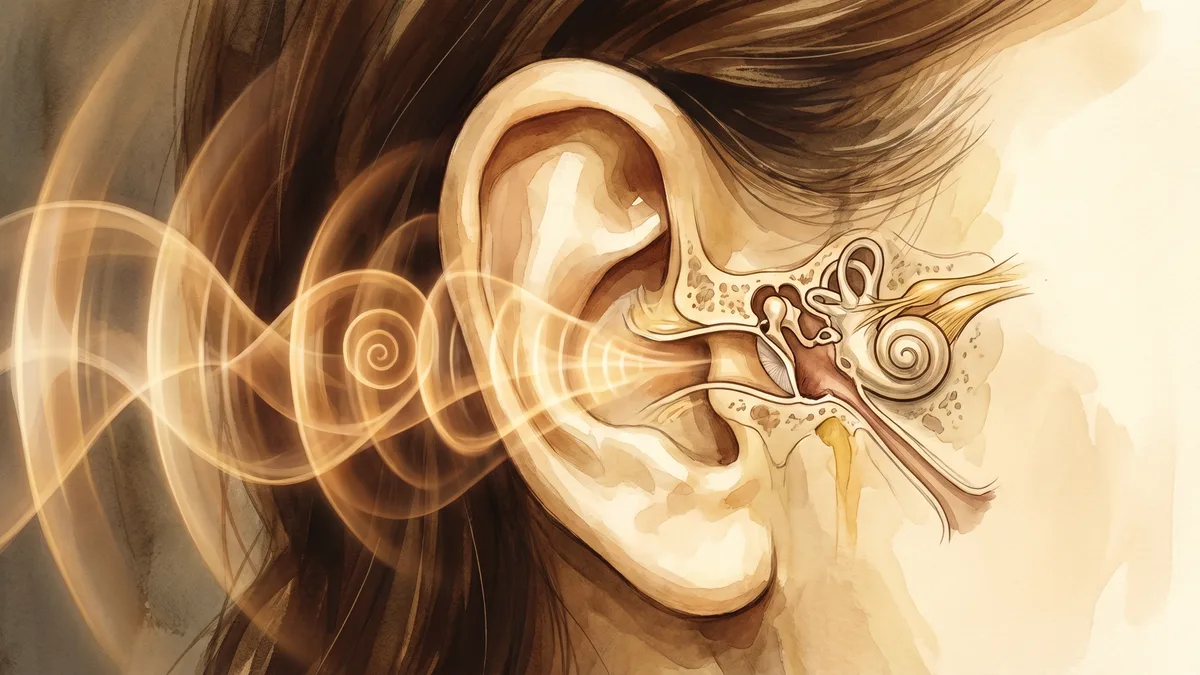

Your Tinnitus Is Not the Problem
Your tinnitus is not the problem. The problem is that you think it’s a problem. The sound itself is a neutral cascade of phantom neural firings, a signal without a source, but the suffering, that thick and heavy cloak of despair, is something we add on top. We are taught from birth to fix what is broken, to eliminate what is unpleasant, and to strive for a life of comfort and ease, so when a persistent, unwelcome guest like tinnitus takes up residence in our awareness, our entire operating system goes into a state of emergency. We believe we have a tinnitus problem, but what we really have is a problem with reality, a deep-seated intolerance for any experience that falls outside the narrow band of what we have deemed acceptable. And this is the part nobody talks about. The entire multi-billion dollar wellness industry is built on this fundamental misunderstanding, on selling us ever more elaborate ways to rearrange the furniture in a house that is already on fire.
"Most of what passes for healing is just rearranging the furniture in a burning house."
The Symptom as a Messenger
What if, instead of a malfunction, the tinnitus was a message? A dispatch from a deeper, wiser part of ourselves that is calling for our attention. In this frame, the sound is not an enemy to be vanquished, but a teacher, albeit a severe and relentless one. It is a teacher that is pointing, with unwavering insistence, to all the ways we are at war with ourselves, all the ways we are caught in patterns of resistance, judgment, and fear. The great tinnitus researcher David Baguley has spoken about the importance of a "biopsychosocial" model, recognizing that the experience is not just a biological event in the ear, but is significantly shaped by our psychological state and our social context. The symptom is the entry point, the doorway into a much deeper inquiry into the nature of our own minds. It is an invitation to stop trying to fix the symptom and to start listening to what it might be trying to tell us.
The Tyranny of Self-Improvement
We live in a culture that is obsessed with self-improvement, with becoming better, stronger, faster, more mindful, more productive. We are constantly striving to add new skills, new habits, new qualities to ourselves, as if we were an unfinished project that needs to be completed. Bear with me on this one. This relentless drive for self-improvement can become a subtle form of self-aggression, a constant message to ourselves that we are not good enough as we are. Tinnitus can become just another thing to be “improved,” another problem to be solved on our endless to-do list of personal development. But what if the path forward is not one of addition, but of subtraction? What if it is not about becoming something new, but about unlearning all the ways we have been taught to abandon ourselves? This is the crucial distinction between self-improvement and self-understanding. One adds, the other reveals. And tinnitus, in its stubborn refusal to be “improved,” can be a powerful catalyst for this shift from doing to being.
A tool that often helps with this is a guided Mindfulness Journal. Many readers have found the Chamomile Tea by Traditional Medicinals (paid link) helpful for this.
"There's a meaningful difference between self-improvement and self-understanding. One adds. The other reveals."
The Practice of Witnessing
The philosopher Jiddu Krishnamurti urged us to cultivate an awareness that is free from the observer and the observed, a state of pure witnessing. When we apply this to tinnitus, it means learning to experience the sound without the "I" who hates it, the "I" who wants it to go away. It is the practice of allowing the sound to be there, in the vast, open space of our awareness, without needing to do anything about it. Not every insight requires action. Some just need to be witnessed. In my years of working in this territory, I have sat with many people as they learn this subtle art. It is a practice of significant stillness, of simply being with the raw data of our senses without the overlay of our stories and judgments. A client once described this as the difference between being in a prison cell with the sound, and being the walls of the cell itself, holding the sound without being defined by it. This is the freedom that is available to us, not in the absence of the sound, but in the midst of it.
"Not every insight requires action. Some just need to be witnessed."
The Edges of a Feeling
When we are in the grip of a strong emotion like fear or despair, it can feel all-consuming, as if it is the only reality. We become identified with the feeling, believing that “I am anxious” or “I am hopeless.” But if we can learn to sit with these feelings, to bring a gentle, non-judgmental attention to them, something remarkable begins to happen. We start to notice that they are not solid, monolithic states. They have textures, rhythms, and boundaries. They arise, they change, and they pass away. The practice of sitting with the discomfort that tinnitus brings, both the physical sensation and the emotional reaction, is a powerful training in this kind of emotional intelligence. It is the willingness to feel what is here to be felt, without needing to immediately escape or numb ourselves. It is in this patient, courageous sitting that we discover our own resilience, our own capacity to be with even the most difficult experiences without being destroyed by them.
Another option worth considering is the Jarrow Formulas B-Right Complex (paid link). You could also try The Power of Now by Eckhart Tolle.
"Sit with it long enough and even the worst feeling reveals its edges."
The Unlikely Path to Wholeness
The journey with tinnitus, when framed not as a battle to be won but as a path of self-discovery, can lead us to a place of unexpected wholeness. It can teach us a level of self-compassion and acceptance that we might never have accessed otherwise. It can force us to slow down, to listen more deeply, and to find a source of peace that is not dependent on external conditions. The wellness industry may sell us the fantasy of a life without problems, a life of perpetual ease and comfort. But the deeper truth is that it is our struggles, our challenges, the very things we would never have chosen for ourselves, that are often our greatest teachers. The tinnitus, this uninvited guest, this teacher disguised as a symptom, may just be the thing that finally brings you home to yourself.
Your Healing Journey: Tools Worth Exploring
While there is no single solution for tinnitus, many people find that the right combination of tools and practices makes a real difference in daily life. Here are some options that align with what we have discussed in this article.
A tool that often helps with this is a guided Mindfulness Journal. Check out the NOW Supplements NAC 600mg (paid link) and see if it fits your situation.
You could also try The Power of Now by Eckhart Tolle. Check out the Mini Stepper by Sunny Health (paid link) and see if it fits your situation.
You could also try Aromatherapy Shower Steamers. Check out the CoQ10 by Doctor's Best (paid link) and see if it fits your situation.
We may earn a small commission from Amazon purchases, which helps support this site at no extra cost to you.
Frequently Asked Questions
Are you saying I shouldn't try to find treatments for my tinnitus?
Not at all. It is wise and compassionate to seek out any medical or therapeutic support that can help to reduce the distress of tinnitus. The point is not to abandon these efforts, but to hold them within a larger frame of self-acceptance. The danger is in believing that your peace and happiness are entirely dependent on finding a "cure." The invitation here is to find a way to live a full and meaningful life, even while you continue to explore treatment options.
How can I listen to what the symptom is telling me?
This is a practice of deep, non-verbal listening. It involves paying attention to the subtle shifts in your body, your emotions, and your thoughts in response to the sound. You might ask yourself, "What does this sound make me want to do?" or "What am I believing about myself right now?" There are no right or wrong answers. It is about cultivating a curious and compassionate relationship with your own inner world, allowing the wisdom that is already there to emerge.